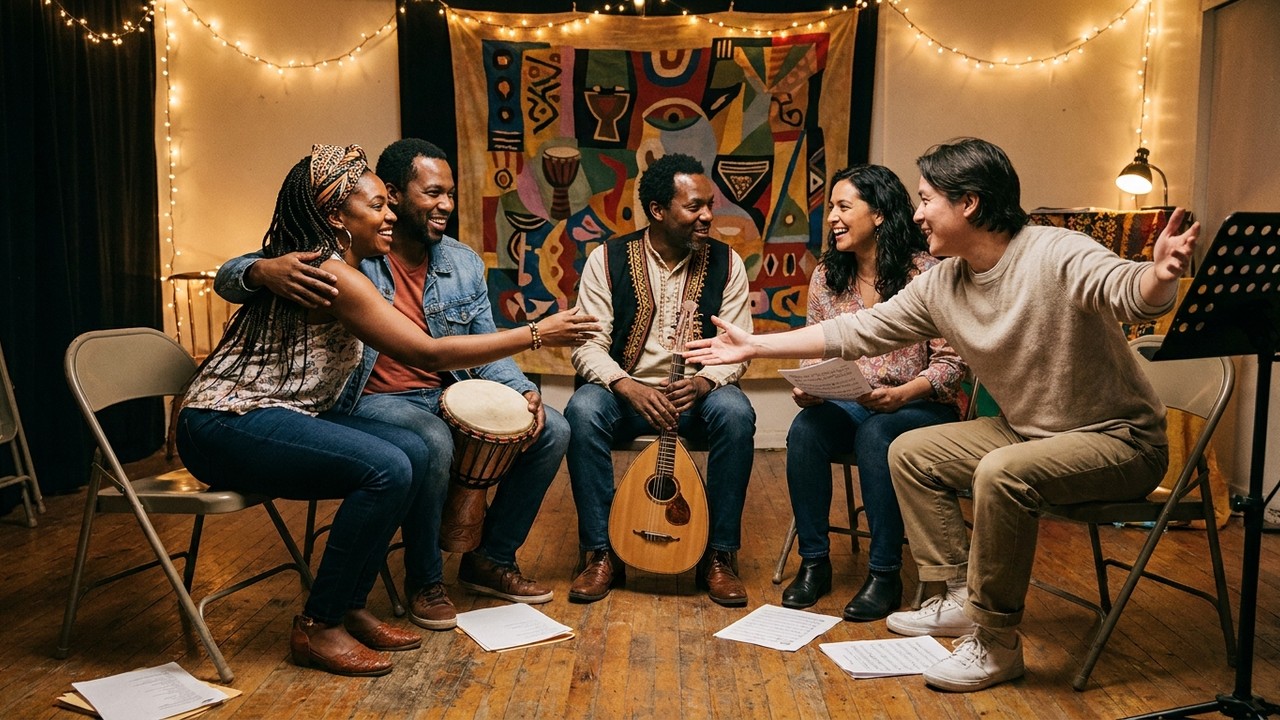
When a small theatre in a mid-sized city opened its doors to a dozen newly arrived families last winter, the performers expected to teach a song. Instead they watched children lead a chorus in a language that had not been heard in public there for decades, and the room changed: strangers became witnesses to a living culture, and a new community began to form.
That scene matters against a stark backdrop: by the end of 2022 more than 108 million people were forcibly displaced worldwide, a record high that underscores the human scale of today's crises. Learn more from UNHCR's figures at a glance here.
Why culture and performance are essential
Displacement often strips people of place and recognition. Preserving ethnic heritage and creating space for performing arts are not luxuries; they are lifelines. UNESCO and partners emphasize that cultural expression supports identity, social cohesion, and psychological recovery for displaced communities. See UNESCO's work on culture and forced displacement here.
Organizations such as Artolution use collaborative art-making to help communities transform trauma into creativity and civic engagement. Read about their projects at artolution.org. The International Rescue Committee also integrates arts and education into refugee support programs to rebuild routines and hope: rescue.org.
Evidence of impact
Research and practitioner reports show arts programs improve psychosocial wellbeing, language acquisition, and social bonding for newcomers. The World Bank and humanitarian partners note that integrating cultural and community-based approaches strengthens long-term inclusion and resilience; an overview of forced displacement policy context is available at the World Bank site.
Art restores dignity, anchors memory, and creates the social threads a new life needs.
How communities can act
You do not need to be a professional artist or policymaker to make a difference. Simple, purposeful steps multiply:
- Attend local performances by refugee and immigrant artists; presence is a form of support.
- Volunteer with resettlement agencies or arts programs that work with displaced people; sign up locally or through organizations like the IRC here.
- Donate to groups that blend refugee assistance and cultural preservation, for example UNHCR for emergency protection donate and Artolution for creative community programs donate.
- Advocate for funding that protects intangible cultural heritage and supports community arts in resettlement budgets.
If a single song can stitch a community together, imagine what a steady program of cultural exchange, supported by international and local partners, can do for families rebuilding their lives. Hope is not passive; it is collective action, attendance, funding, and the willingness to listen.
Start today: attend a performance, share a refugee artist's story, or contribute to an organization helping preserve ethnic heritage through the arts. Small acts build a future where safety, identity, and creativity travel together.