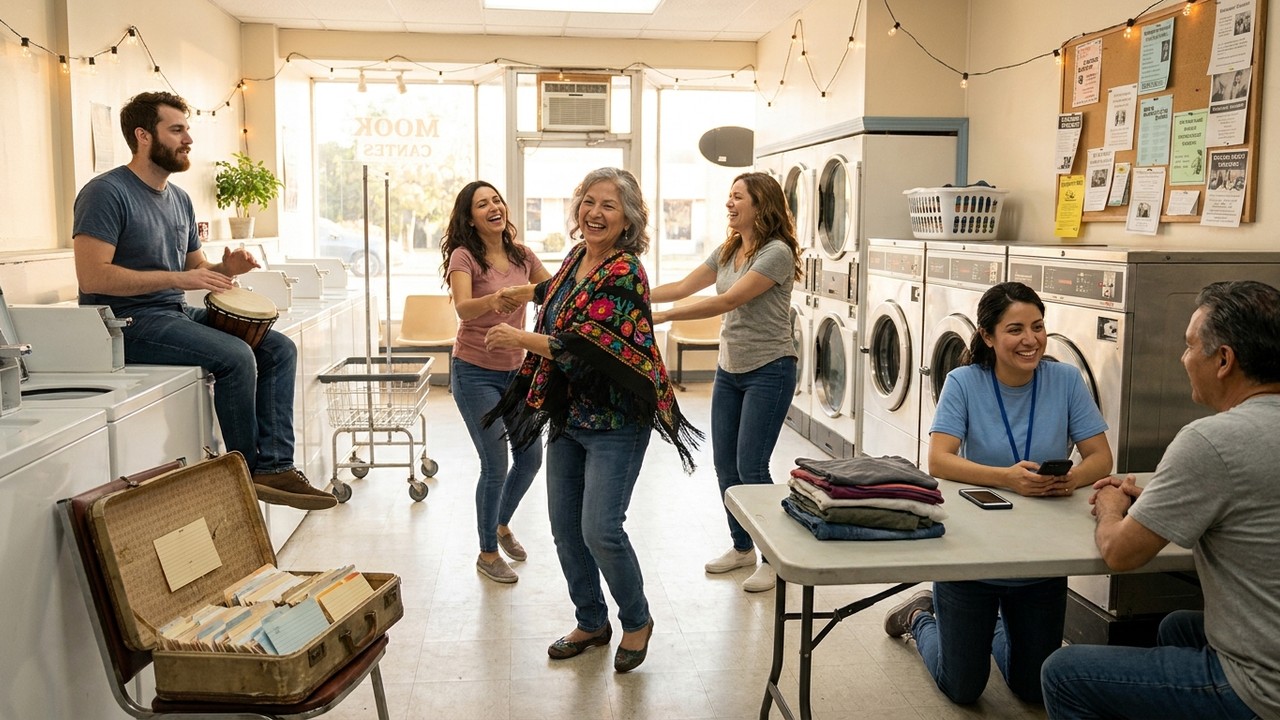
She arrived with a suitcase, a handful of recipes, and a lullaby that had soothed three generations. In a small laundromat turned community hub, Ana leads a weekly dance circle — teaching steps from her hometown while translators and neighbors fold clothes together. The room smells of detergent and celebration; for two hours, immigration papers and isolation give way to rhythm and welcome.
Why it matters
Across the United States, arts and heritage work are quietly rebuilding belonging where services are thin. Immigrants make up roughly one in eight U.S. residents, bringing language, labor, and creative traditions that strengthen communities and local economies (Pew Research Center). At the same time, community arts programs generate measurable economic and social returns: nonprofit arts and culture activity has been shown to create jobs and local spending that sustains neighborhoods (Americans for the Arts).
Nonprofits are on the front lines. Organizations like The Laundromat Project use everyday spaces to host art-making and civic exchange in underserved neighborhoods, while groups such as RAICES provide legal and social services that keep immigrant families together. Cultural networks like the National Association of Latino Arts and Culture (NALAC) invest in artists who defend and renew ethnic heritage through performance and storytelling.
"Art taught me the words I couldn't say, and my neighbors taught me the courage to say them," a program participant recently shared, describing the quiet power of local performance spaces.
What impact looks like
When immigrant artists are supported, three things happen:
- Connection: Shared cultural practices build trust across language and class divides.
- Resilience: Creative programs provide safe spaces and mental health benefits for underserved people.
- Visibility: Performing arts preserve ethnic heritage and center voices often left out of mainstream narratives.
These are not abstract outcomes. They are classrooms, storefront stages, legal clinics, and neighborhood festivals where people laugh, remember, and plan together.
How you can act today
Small choices ripple into lasting support. Consider:
- Giving to organizations that blend immigrant advocacy and arts access, such as The Laundromat Project or RAICES.
- Attending a local ethnic heritage performance or community arts event to show up and listen.
- Volunteering time or skills at neighborhood cultural centers, schools, or legal clinics.
- Asking your local arts council to fund programs that serve refugees, immigrants, and underserved communities.
Hope is practical: every class taught, every legal intake completed, every ticket bought keeps a tradition alive and strengthens belonging. If you want one concrete step now, search for a neighborhood arts or immigrant-support group and register as a volunteer or donor this week. The small stage where Ana dances was built one person at a time; you can be the next builder.