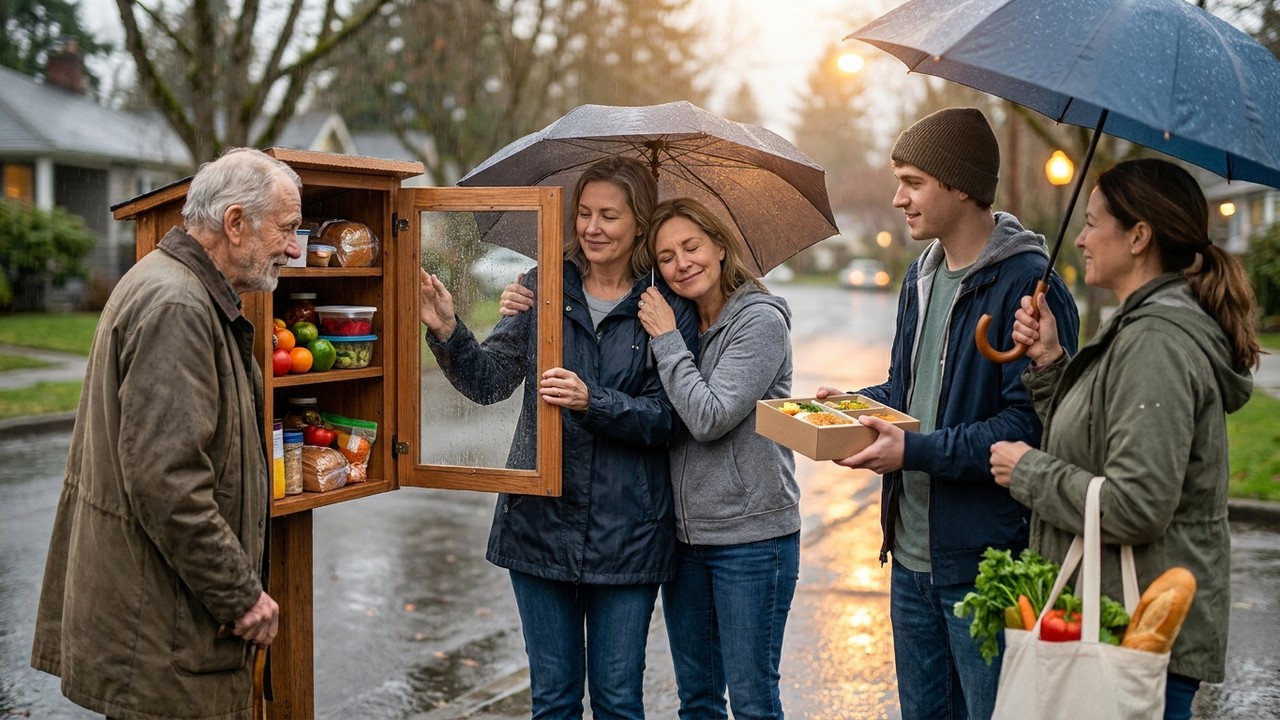
When Maria unlocked the tiny pantry on a rainy Tuesday last month, a single mother she had never met hugged her like family and whispered, "You saved our dinner." That scene is playing out in hundreds of communities every day — quiet acts that stitch safety nets where systems fray.
Why it matters now
Food security and healthy living are inseparable. The CDC reports adult obesity prevalence in the U.S. at 41.9 percent (based on most recent national data), a reminder that access to food does not always equal access to nutritious options: cdc.gov/obesity.
At the same time, community organizations are straining to meet demand. Feeding America is the country's largest hunger-relief network working through food banks and mobile pantries to fill gaps: feedingamerica.org. And when crises hit, the American Red Cross mobilizes rapidly — it notes its long history of disaster response to communities in immediate need: redcross.org/disaster-relief.
Stories behind the statistics
Maria's pantry started as a kitchen table project and now partners with a county Meals on Wheels program to deliver balanced meals to seniors and families: mealsonwheelsamerica.org. For one elderly man, a delivered meal meant medicine could be taken on time; for a teenager it meant fresh fruit after school instead of skipping dinner.
"People don't come for charity. They come because someone recognized their humanity," Maria said.
These micro-moments are crisis intervention and community support rolled into one: emergency food when storms or job losses hit, and steady programs that promote healthy living over time.
How you can join in
Every action multiplies. Here are practical ways to help right now:
- Donate or volunteer at your local food bank through Feeding America: feedingamerica.org.
- Support disaster response funds and blood drives with the American Red Cross: redcross.org.
- Deliver meals or sponsor a route with Meals on Wheels to support seniors and chronically ill neighbors: mealsonwheelsamerica.org.
- Advocate for policies that strengthen SNAP, school meals, and community health investments by contacting local representatives.
These steps are both compassionate and strategic: they reduce immediate hunger, improve nutrition, and lower long-term health risks.
A hopeful close
Maria's pantry is small, but it is proof: neighbors can create safety nets that catch people before they fall through. When communities invest a little time, food, or funds, crisis intervention becomes prevention and loneliness becomes connection.
Take one small step today: find your local food bank, sign up for a volunteer shift, or make a modest donation. Collectively these acts translate into hot dinners, healthier bodies, and calmer nights for families in crisis. When care and food meet, hope is not abstract — it is a bowl on the table.