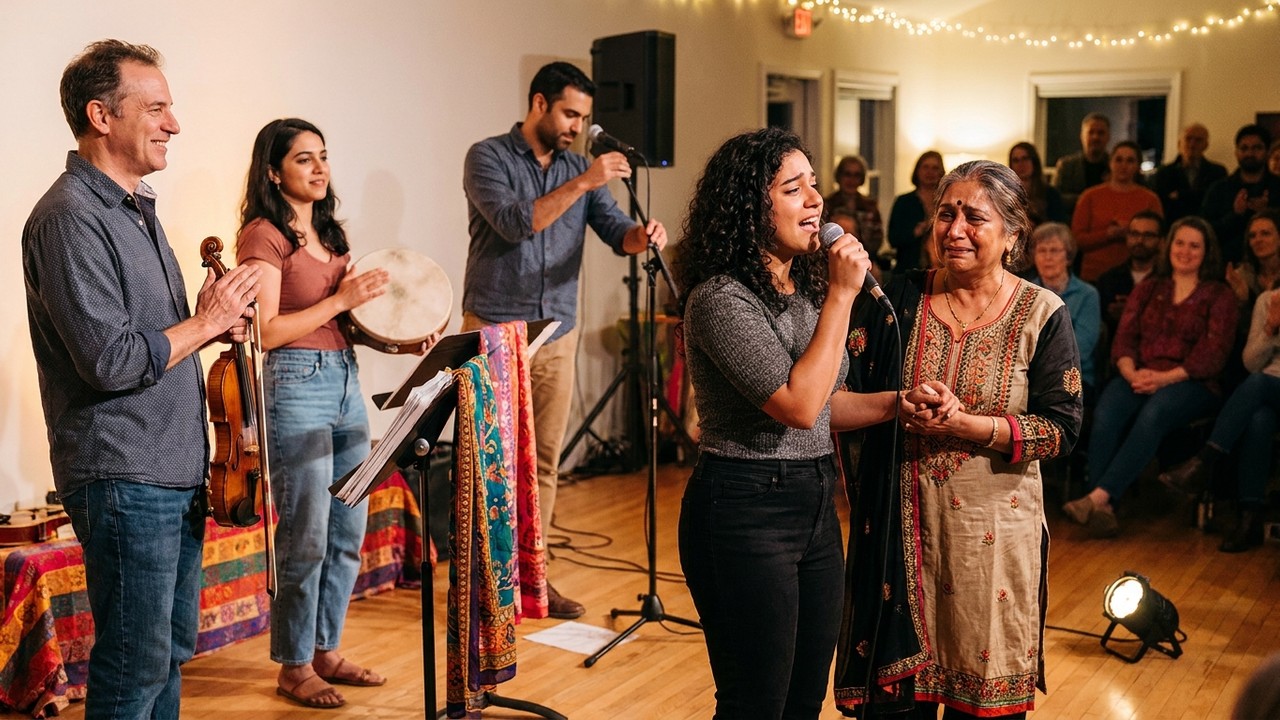
When a teenager sings a lullaby in her grandmother's tongue on a brightly lit community stage, she is not just performing — she is stitching past, present, and future together. In 2023 the world crossed an alarming threshold: more than 110 million people were forcibly displaced globally, a record documented by UNHCR that underscores how urgently communities need pathways to belong. UNHCR Global Trends 2023
Why performing arts and heritage matter now
Across cities, community performing arts programs become safe, practical classrooms for life skills: public speaking, collaboration, emotional regulation and resilience. These programs also preserve and celebrate ethnic heritage, turning private memories into public history. Organizations such as El Sistema USA use ensemble music education to reach young people from immigrant, low-income, and refugee families, teaching discipline and belonging alongside technique.
Evidence and the human stories behind the numbers
Recent reporting and studies have tied community arts to improved mental health and civic engagement, especially for displaced people and youth navigating cultural transitions. The arts offer concrete tools for life skills: rehearsal becomes routine, performance becomes confidence, and shared cultural pieces become bridges across difference. The Smithsonian Center for Folklife and Cultural Heritage documents how living traditions sustain identity and foster intercultural dialogue; see its programs that connect communities and visitors through shared cultural expression at folklife.si.edu.
"When we sang my grandmother's song together, I stopped feeling invisible," said a young participant in a community theater program integrating newcomer families. This is the quiet kind of change statistics cannot fully capture.
From awareness to action
Small acts scale. Attend a neighborhood performance, enroll a young person in a music or theater workshop, or support nonprofits that marry arts with social services. Consider organizations that focus on both international support and local engagement: donate to trusted groups working with displaced communities and arts education, volunteer as a mentor, or help underwrite a community showing that centers ethnic heritage and life skills.
- Volunteer: Local arts centers and El Sistema-affiliated ensembles need mentors, rehearsal assistants, and translators.
- Attend and amplify: Buy tickets, bring friends, and share programs that highlight ethnic heritage and newcomer voices.
- Give sustainably: Support organizations that combine cultural preservation with practical life-skill training for youth and refugees.
Community performing arts do more than entertain. They restore voice to those uprooted, pass heritage across generations, and teach the life skills that build stable futures. As UNHCR's recent figures remind us, millions need more than shelter — they need belonging. Join a program, support a nonprofit, or bring a performance to your neighborhood and be part of turning displacement into welcome. For ideas and partners, start with El Sistema USA and explore community arts resources at Americans for the Arts and the Smithsonian Folklife Center.
Hope is not passive. It is a rehearsal room full of people learning the steps of belonging. Step in.