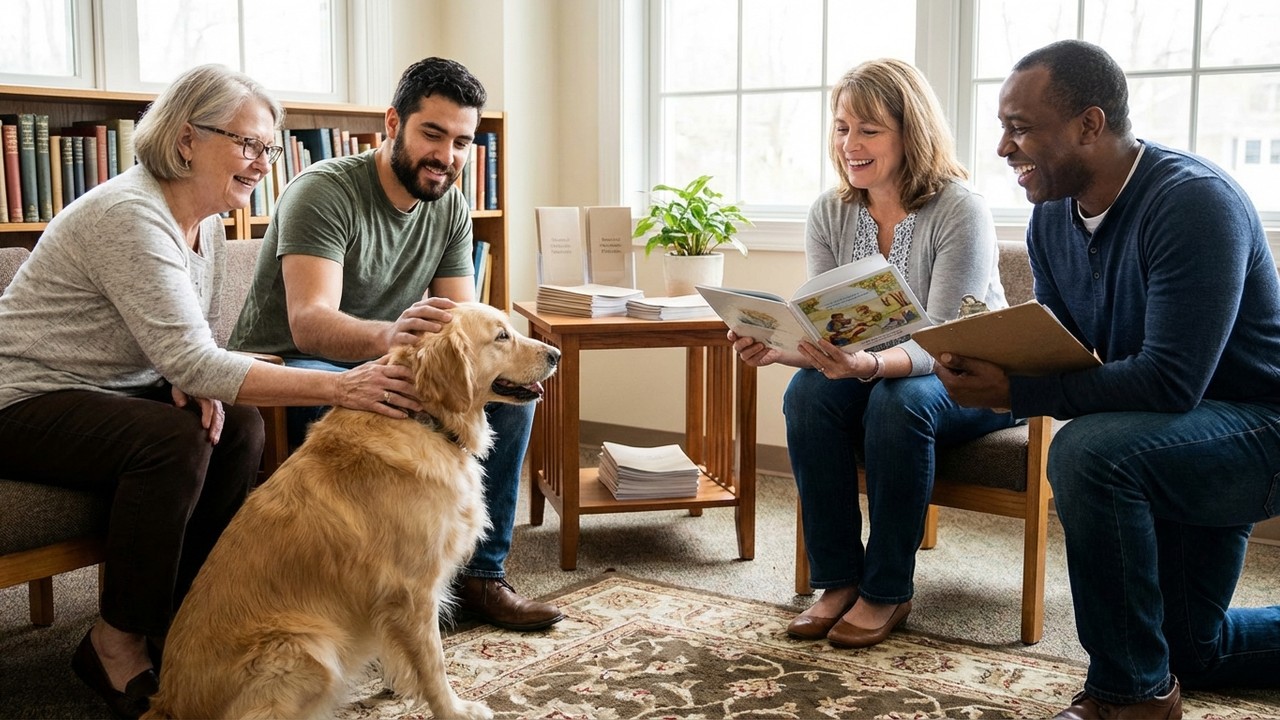
When Maria brought her shy nine-year-old, Sam, to the neighborhood resource center, she expected tutoring and warm drinks. What she did not expect was a golden-retriever named Daisy curled on the rug, listening to Sam read aloud — and watching him find his voice. That afternoon became a turning point: a child, a dog, and a community resource created a bridge to learning and belonging.
Why this matters now: Pets are part of millions of households and community life — the American Pet Products Association reports that about 70 percent of U.S. households owned a pet in the 2023-2024 survey, a sign of how central animals are to family and social health (APPA). At the same time, community resource centers and libraries are redefining themselves as inclusive hubs for education, social support, and adoption drives — creating powerful, low-cost paths to both human and animal welfare.
Evidence and partners making change
Programs that pair children with therapy animals have measurable benefits. Organizations such as Pet Partners run reading-with-dogs programs that build confidence and fluency, while research compiled by groups like the Human-Animal Bond Research Institute (HABRI) shows connections between animal interaction and improved mental wellbeing. For shelter outcomes and national trends, the nonprofit data hub Shelter Animals Count tracks how local efforts translate into more adoptions and better live outcomes.
Nonprofits large and small are linking these threads. Best Friends Animal Society focuses on community-based strategies to reduce shelter intake and increase lifesaving support, while PetSmart Charities funds local adoption events and resource-center partnerships that bring animals and people together.
What a community resource center can do
Resource centers that blend education, digital access, and pet-friendly programming create multiple wins: improved literacy, reduced social isolation, and healthier outcomes for animals. UNESCO emphasizes inclusive education approaches that place centers at the heart of community recovery and equity (UNESCO). Combining those priorities with animal welfare opens new avenues for belonging.
Practical ways to help today:
- Adopt or foster from a local shelter; check listings from local shelters and national partners such as Best Friends and PetSmart Charities.
- Volunteer to read with a child and a therapy dog; learn about programs through Pet Partners.
- Support your neighborhood resource center with time, supplies, or a small donation — these hubs multiply impact for education and social inclusion.
- Share data and success stories from platforms like Shelter Animals Count to help funders and local leaders see what works.
"When a child reads to a calm dog, the room shifts. The worry falls away and confidence grows."
Stories like Sam and Daisy are not outliers — they are models. Across the country, community centers are turning into places where education, pet adoption, and social inclusion happen at once. That synergy is how neighborhoods recover, children learn, and animals find second chances.
Take action: Visit your local resource center this month. Offer to host or sponsor a reading-with-dogs session, foster an animal, or sign up as a volunteer. Small steps from many people create lasting change: better literacy, fewer lonely children, and more animals in loving homes. For resources and partners, start with Best Friends, Pet Partners, and Shelter Animals Count. Together we can turn shelter moments into second chances and classrooms into welcoming, inclusive spaces.