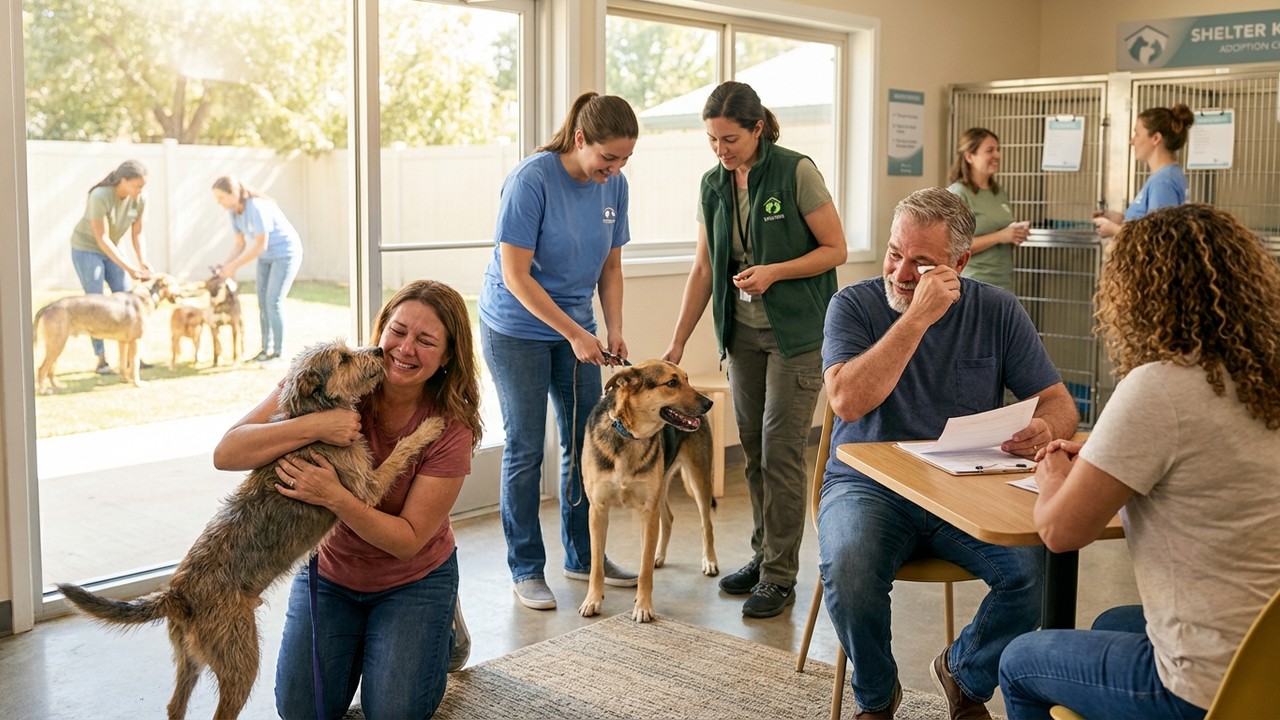
When Maya carried home a trembling terrier from an overcrowded shelter last winter, she thought she was rescuing him. Months later she told volunteers, "He saved me." That personal turnaround mirrors a global need: depression affects more than 280 million people worldwide, according to the World Health Organization, and connections with animals are increasingly recognized as part of recovery and resilience (WHO).
At the same time, millions of companion animals need homes. The ASPCA reports that approximately 6.3 million companion animals enter U.S. animal shelters each year — about 3.1 million dogs and 3.3 million cats (ASPCA). Shelters, foster programs, and adoption networks work around the clock to match animals with people who will care for them.
Training, behavior, and the human-animal bond
Training and behavior support are crucial: a shy dog or a fearful cat can become a confident companion with the right intervention. Organizations like the ASPCA provide behavior resources for shelters and adopters (ASPCA behavior), and therapy-dog groups such as Therapy Dogs International train animals to support people in hospitals, schools, and disaster response (Therapy Dogs International). Research summaries collected by the Human-Animal Bond Research Institute highlight measurable mental-health benefits from companion animals and animal-assisted interventions (HABRI).
Medical and public-health outlets also acknowledge the benefits: Harvard Health has reviewed evidence that companion animals can reduce loneliness, lower stress, and improve emotional well-being (Harvard Health). Those outcomes matter not just for individuals but for communities grappling with isolation and limited mental-health resources.
"He nudged me into sunlight when I could not move myself there," said Maya, now a regular volunteer.
What you can do today
Action is simple and powerful. You can help animals and people heal by supporting proven paths: adoption, training, shelter support, and advocacy. Organizations such as Best Friends Animal Society make it easy to search for adoptable pets and support no-kill shelter work (Best Friends), while data and coordination from Shelter Animals Count help communities track needs and outcomes (Shelter Animals Count).
Steps you can take now:
- Adopt or foster: Give a shelter animal a home or a temporary safe space; adoption pages at Best Friends list animals ready for new families (adopt).
- Volunteer or train: Help with behavior work, socialization, or therapy-dog programs to increase animals' chances of adoption.
- Donate or advocate: Support local shelters and national nonprofits that provide training, veterinary care, and mental-health partnerships.
This is not only about saving animals; it is about building caring connections that strengthen mental health. For every story like Maya's, there are shelters, staff, trainers, and volunteers ready to create another second chance. Step forward: adopt, help train, or support your local shelter—and be part of a quiet, powerful movement that heals both animals and people.