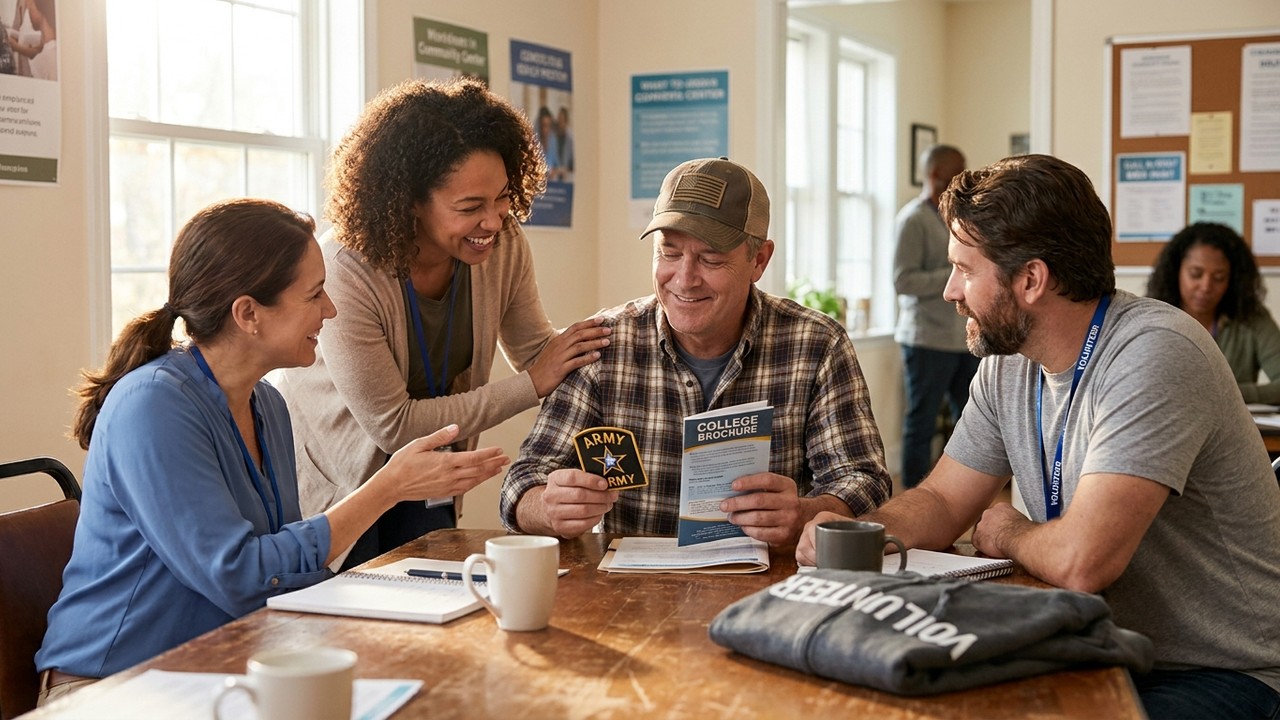
When Army veteran Marcus first walked into a community center near his town, he held a combat patch in one hand and a college brochure in the other. He had survived deployment but not the silence that followed. Two years later he mentors high school students learning to manage anxiety and prepares to enroll in college courses. His story shows how recovery, purpose, and community can intersect.
Why this matters now
Mental health and trauma touch millions: the World Health Organization describes depression as a leading cause of disability worldwide and a major contributor to the overall global burden of disease. See the WHO fact sheet for context at WHO: Depression. In the U.S., organizations such as NAMI note that approximately one in five adults experience mental illness each year; more details are available at NAMI Mental Health Statistics. The Department of Veterans Affairs maintains ongoing tracking of veteran suicide and prevention efforts; their data and resources are at VA — Suicide Prevention Data.
On the ground: nonprofits turning pain into purpose
Groups like Cohen Veterans Network, Team Rubicon, and the National Alliance on Mental Illness provide concrete models: accessible clinical care, peer mentorship, and mission-driven volunteer work that rebuilds confidence and social connection. Team Rubicon, for example, engages veterans in disaster response work that doubles as trauma recovery and community service; learn more at their site.
Recent system-level advances matter too: the nationwide 988 mental health lifeline offers immediate support; see SAMHSA 988. Community-based clinics and telehealth are expanding access, a critical change for rural veterans and youth with few local services.
What helps people like Marcus
Recovery is rarely a single clinic visit. Effective pathways combine therapy, peer support, vocational training, and civic engagement. Evidence from peer-reviewed and practitioner reports shows that social connection, purpose-driven activity, and timely access to care reduce symptoms and improve long-term outlook.
"When people are given both care and a role, healing accelerates," said a clinician working with veterans and youth in community programs.
You can be part of that solution:
- Donate or volunteer with proven organizations such as Cohen Veterans Network, Team Rubicon, or your local NAMI affiliate (find local NAMI).
- Advocate for sustained funding for community mental health centers and school-based services; contact local representatives to express support.
- If someone is in crisis, call or text 988 (U.S.) for immediate help; international resources are listed by WHO and country health services.
- Hire, mentor, or support veterans and young people rebuilding careers—meaningful work heals.
There is grief and urgency in these problems, but there is also momentum: expanding lifelines, growing peer networks, and community programs that turn trauma into leadership. Marcus now helps teens practice public speaking, trains volunteers in disaster response, and meets weekly with a therapist. His recovery is not an endpoint but a bridge.
Take action today: learn, donate, call 988 in a crisis, or give your time to a local program. Every conversation, every hour volunteered, and every policy voice counts. Healing forward is a collective work—and it starts with one person reaching out.