When Amina arrived at the neighborhood resource center after days on the road, she carried a bruised backpack and one hopeful question: can my little brother go back to school? That single question sits at the intersection of two urgent crises unfolding worldwide — children shut out of learning and millions forced from home — and it is being answered by neighbors, nonprofits, and creative local programs.
Why this matters now
Forced displacement has reached record levels: the UN Refugee Agency reports the number of people forcibly displaced is historically high, creating enormous pressures on host communities and their schools and services (UNHCR Global Trends). At the same time, the World Bank says that learning poverty — the share of 10-year-olds unable to read a simple text — remains a crisis that undermines futures and economies (World Bank).
How community resource centers help
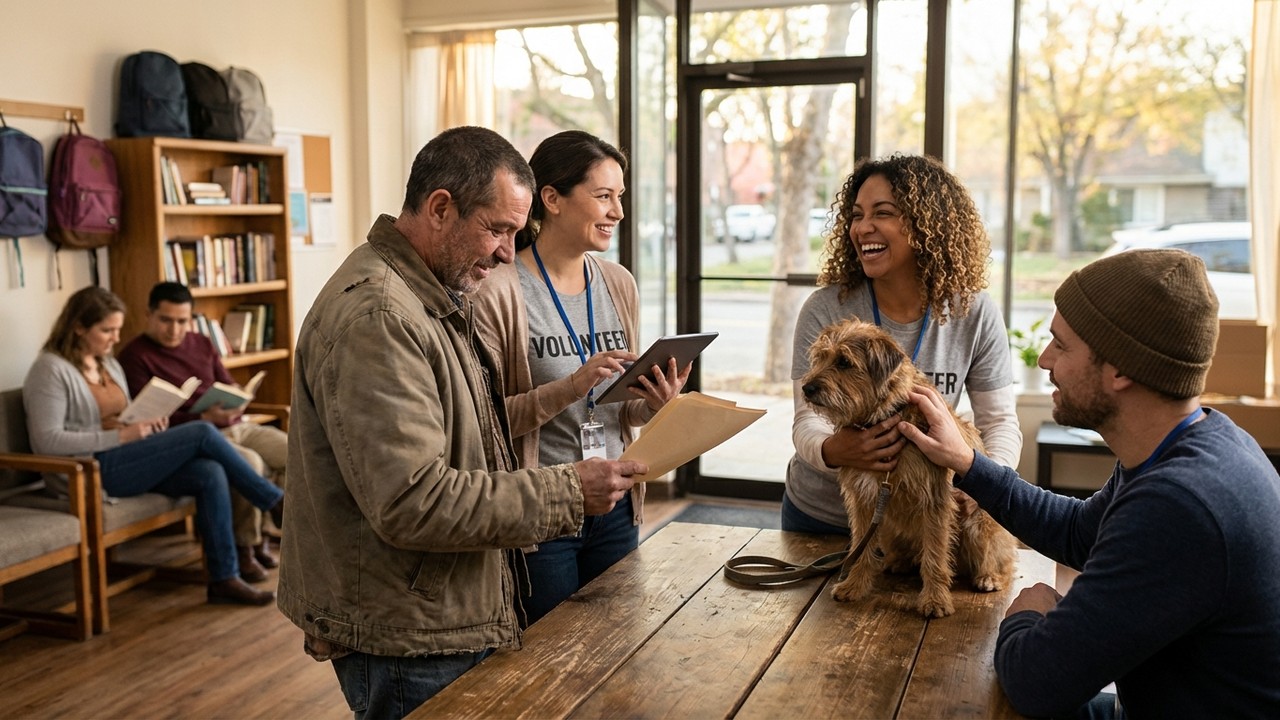
Resource centers and community outreach programs are where global pressures meet local solutions. They enroll children in catch-up classes, connect families to legal and health services, and provide quiet corners where a child can read or a family can fill out forms. Nonprofits like Save the Children and UNICEF support programs that combine educational recovery with psychosocial help, while local centers translate those services into everyday relief.
There is also often an unexpected counselor on hand: animals. Animal-assisted programs and adoption drives, run by groups such as Best Friends Animal Society and the ASPCA, help reduce stress and build trust. In the U.S. roughly 6.3 million companion animals enter shelters each year, creating both a need and an opportunity to connect families to pets and shelter volunteers. A street-facing resource center partnered with a regional rescue to host adoption pop-ups and after-school tutoring. Parents who once feared bringing children to public spaces began to linger for classes; a newly adopted dog helped a shy boy practice reading aloud. These small ripples add up: children return to learning, families rebuild routines, and shelters find permanent homes.
What you can do today
Every reader can help translate concern into action. Consider these practical steps:
- Volunteer or tutor at your local community center or school to help children catch up on learning.
- Support refugee and displacement relief by donating to or partnering with established organizations like UNHCR and Save the Children.
- Adopt or foster from reputable shelters; learn more at Best Friends or your local shelter, and help reduce the 6.3 million annual shelter.
- Donate supplies (books, tablets, hygiene kits) to resource centers in your area to keep kids learning and families stable.
- Share your skills — legal aid, language tutoring, or program management are in constant demand at community centers.
"Small acts — a warm meal, a volunteer hour, an adopted pet — become the scaffolding that lets families rebuild and kids learn again."
If you left this article with one thought, let it be this: systems shift when communities act. Support a resource center, volunteer an hour a week, adopt a shelter dog, or give to a trusted nonprofit. These are not symbolic gestures — they are practical, measurable steps that restore learning, calm trauma, and create second chances.
Take action now: find volunteer openings at VolunteerMatch, learn about refugee needs at UNHCR, or search local shelters through Best Friends to adopt or foster. Small choices today become hope for tomorrow.