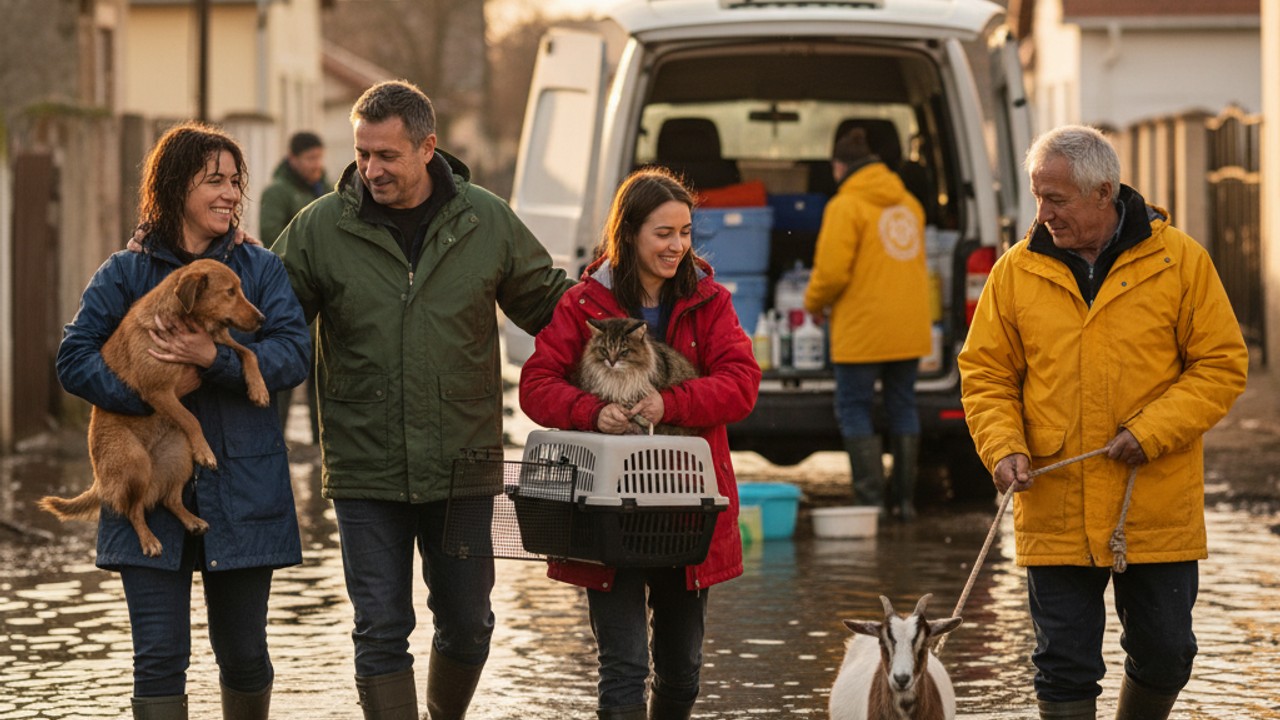
When floodwaters rose last season, a single image circulated that captured what statistics often hide: a woman wading through waist-deep water, carrying her child on one hip and a trembling dog in the other arm. That photo is not just a moment of survival — it is a reminder that humanitarian crises do not separate human lives from animal lives.
The scale is staggering. According to UNHCR’s Global Trends report, about 108.4 million people were forcibly displaced worldwide in 2023 — each person carrying stories, losses, and often the animals that are part of their household and recovery efforts (UNHCR Global Trends 2023). At the same time, scientific assessments warn that biodiversity is under severe pressure: the IPBES global assessment estimates roughly 1 million species are threatened with extinction without urgent action (IPBES).
Why animal-inclusive rescue matters
When rescue programs ignore animals, families sometimes refuse to evacuate, pets suffer, and the wider ecosystem loses vital support for human recovery. Organizations on the ground are changing that picture by integrating animal welfare into humanitarian response.
- Humanitarian safety — keeping people and their animals together improves uptake of evacuation and sheltering programs.
- Public health — veterinary care and humane handling reduce risk of zoonotic disease and protect livelihoods.
- Ecosystem resilience — saving livestock and local wildlife supports food security and community recovery.
Groups such as World Animal Protection have developed disaster-response toolkits to protect animals in crises, while humanitarian organizations like the International Rescue Committee and medical teams like Médecins Sans Frontières increasingly coordinate to deliver integrated aid. Conservation science and advocacy from bodies like the IUCN Red List and IPBES push for policies that treat animal welfare as part of resilient societies.
"When communities and their animals are saved together, recovery is faster and dignity is preserved."
That principle is already guiding practical programs: mobile veterinary clinics in disaster zones, animal-inclusive shelter protocols, and community trainings that blend livelihood support with ecosystem restoration.
How you can help right now
There is space for everyone to act. Here are simple, effective steps:
- Support organizations doing integrated work — donate or sign up to volunteer with groups such as World Animal Protection, International Rescue Committee, or Humane Society International.
- Advocate for animal-inclusive disaster planning with local authorities and shelters; share evidence that humane rescue saves lives and speeds recovery.
- Learn and spread facts: read authoritative reports from IPBES and UNHCR and bring those insights to your community groups.
Crises will continue, but how we respond defines our shared future. By recognizing that animal welfare, rescue programs, advocacy, and global solidarity are part of the same mission, we can save more lives and rebuild more resilient communities. Join the movement to make rescue truly inclusive — for people, for animals, and for the ecosystems that bind us.