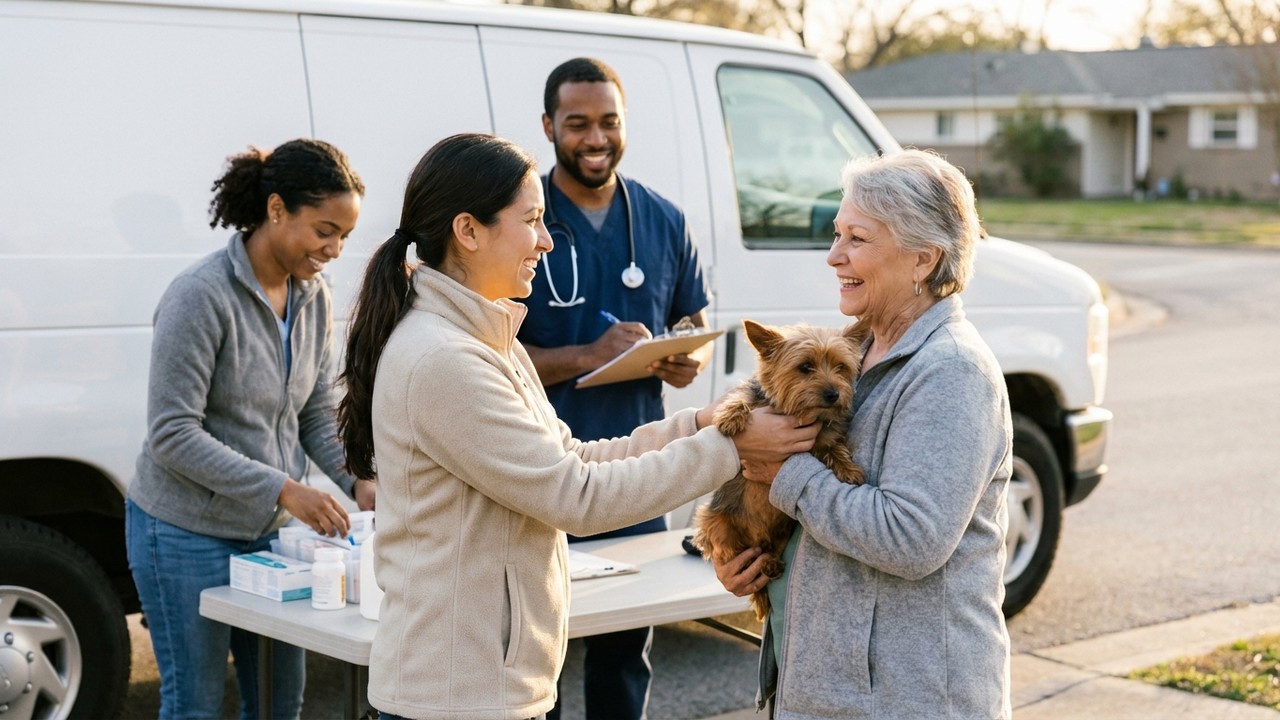
When a volunteer lifted a trembling terrier from a flooded porch last summer, she did more than save a life — she opened a doorway back into a neighborhood where access to basic care had been scarce for both people and pets. That dog, patched up by a mobile clinic and reunited with a relieved owner, became a small emblem of a larger truth: animal welfare and human health move together.
Why the link matters
One Health is more than a slogan. It is a framework that recognizes human, animal, and environmental health are interconnected. The CDC explains how zoonotic disease prevention, surveillance, and community outreach bridge gaps across sectors and populations: CDC One Health. At the same time, the World Health Organization highlights persistent gaps in access to essential health services for people worldwide, underscoring the equity challenge we face: WHO on Universal Health Coverage.
Shelters and statistics that demand action
Animal shelters remain a frontline for both rescue and community support. The ASPCA reports that roughly 6.3 million companion animals enter U.S. shelters each year, demonstrating the scale of need and opportunity for systemic solutions: ASPCA Pet Statistics. Shelters are not just places for animals; they are hubs for fostering community resilience when paired with training, veterinary outreach, and social services.
Training that transforms outcomes
Investing in training — from shelter medicine to community veterinary outreach — multiplies impact. Programs like the Cornell Shelter Medicine Program provide evidence-based clinical guidance and continuing education that improve animal outcomes and reduce public-health burdens. Nonprofits such as Best Friends Animal Society and RedRover pair rescue and training with community programs to keep pets and people together.
"When a community has the tools to care for its animals, it also gains pathways to better health, stronger social ties, and fewer crises."
How you can help, right now
Change comes from practical steps that knit together welfare, health equity, and skills.
- Volunteer or foster: Local shelters need hands and hearts; fostering keeps animals out of crisis and creates space for urgent rescues.
- Support mobile clinics and community vet care: These programs remove financial and geographic barriers and build trust.
- Invest in training: Fund or enroll staff in shelter medicine and animal-handling courses to raise quality of care.
- Advocate: Encourage local policy and funding for community-based veterinary services and public health programs that use a One Health approach.
Every donation, hour volunteered, and training session completed strengthens a network that protects both pets and people. Organizations like Best Friends, ASPCA, and community shelter medicine programs are proving that rescue plus training equals long-term impact. There is reason for hope: when communities get the tools they need, animals stay in homes, shelters become hubs of resilience, and health equity moves forward.
Take one small step today: contact your local shelter to volunteer, ask about their training needs, or support a mobile clinic. Hands-on care changes lives — human and animal — and builds a fairer, healthier future for all.