
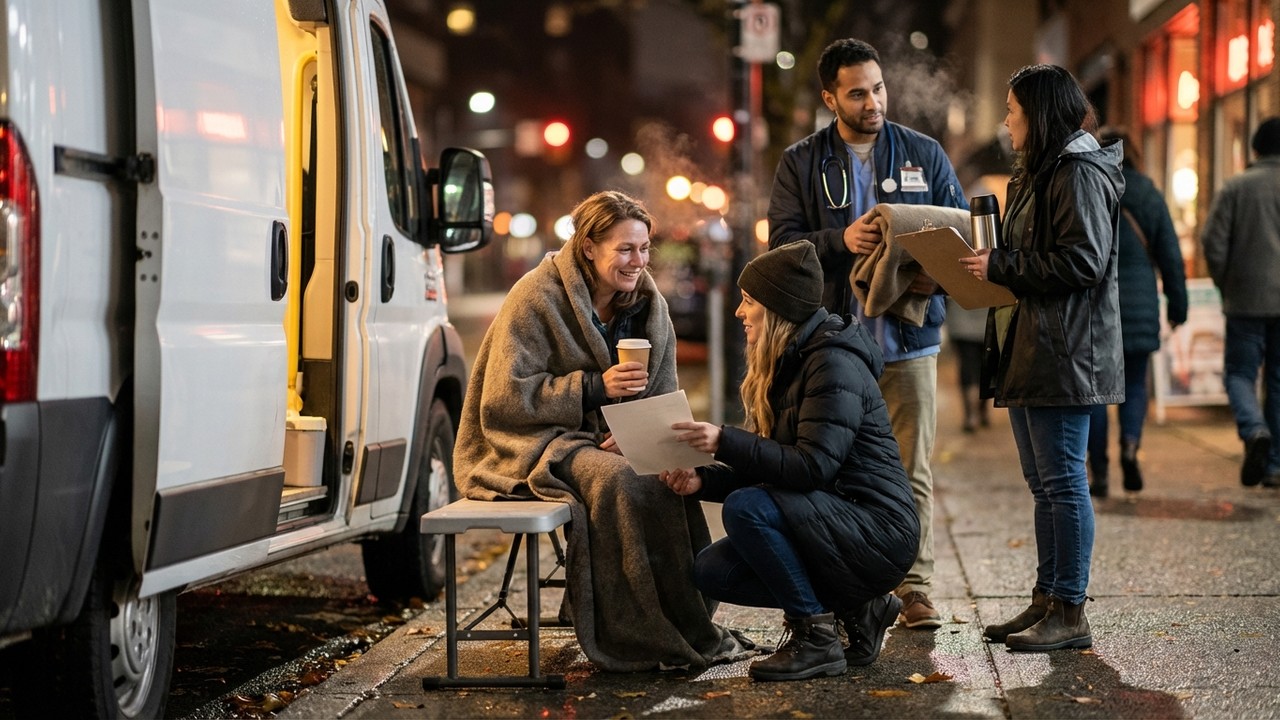
On a cold January night a few years ago, a woman named Maya sat on a hospital bench after being turned away for lack of ID. She had a cough that would not quit, a cracked tooth, and a heart full of shame. A mobile clinic parked outside took her in, treated her infection, connected her to a housing navigator, and offered a warm referral to a shelter that night. That single human connection changed the arc of her year.
Why connection matters
Maya's story is not unique. Homelessness is a public health crisis layered with social isolation and barriers to care. According to HUD's Point-in-Time data portal, tens to hundreds of thousands of people experience homelessness on any given night in the U.S.; state and local counts remain the foundation for policy and funding decisions (HUD PIT/HIC). At the same time, the U.S. Surgeon General framed social isolation as a public health concern in a 2023 advisory, calling community and connection a cornerstone of health (HHS Surgeon General Advisory).
The health gap and who is stepping in
People experiencing homelessness face higher rates of chronic illness, untreated mental health conditions, and barriers to primary care. Organizations like the National Health Care for the Homeless Council are documenting these gaps and building practical solutions such as mobile health teams, integrated primary care, and harm reduction services (NHCHC). The National Alliance to End Homelessness continues to track trends in unsheltered homelessness and advocate for evidence-based interventions that pair housing with access to care (NAEH). Local programs such as the Boston Health Care for the Homeless Program show how combining street outreach, clinical care, and housing navigation can reduce emergency visits and restore dignity (BHCHP).
Small actions, big impact
Connection is treatment: a listening volunteer, a clinic that comes to the street, a caseworker who follows up — these close the gap between crisis and care. Public health leaders now urge systems to treat social connection like a determinant of health. The evidence and recent advisories make the case that preventing isolation and expanding access are complementary strategies.
- Donate time or skills: Volunteer with local health-for-the-homeless programs or street outreach teams.
- Support policy: Advocate for Housing First, Medicaid expansion, and funding for mobile clinics through local representatives and community petitions.
- Partner locally: Encourage employers and clinics to build low-barrier services and social connection programs.
"Connection is a public-health priority — and the lack of it harms us all." — U.S. Surgeon General (2023)
Every system-level win starts with human stories like Maya's. When health access, social support, and housing navigation meet someone exactly where they are, outcomes improve and communities grow stronger.
What you can do today: Find a local health-for-the-homeless provider or shelter and ask how to volunteer or donate; contact your state and local elected officials to back Housing First and community-based clinics; share trusted resources with neighbors experiencing housing instability. For organizations to connect with, start at the National Health Care for the Homeless Council (NHCHC) or the National Alliance to End Homelessness (NAEH).
Hope is real: Integrated, compassionate models are scaling, and public health leaders are naming social connection as a measurable priority. Together we can move from emergency care to sustained health through housing, access, and human connection.


