
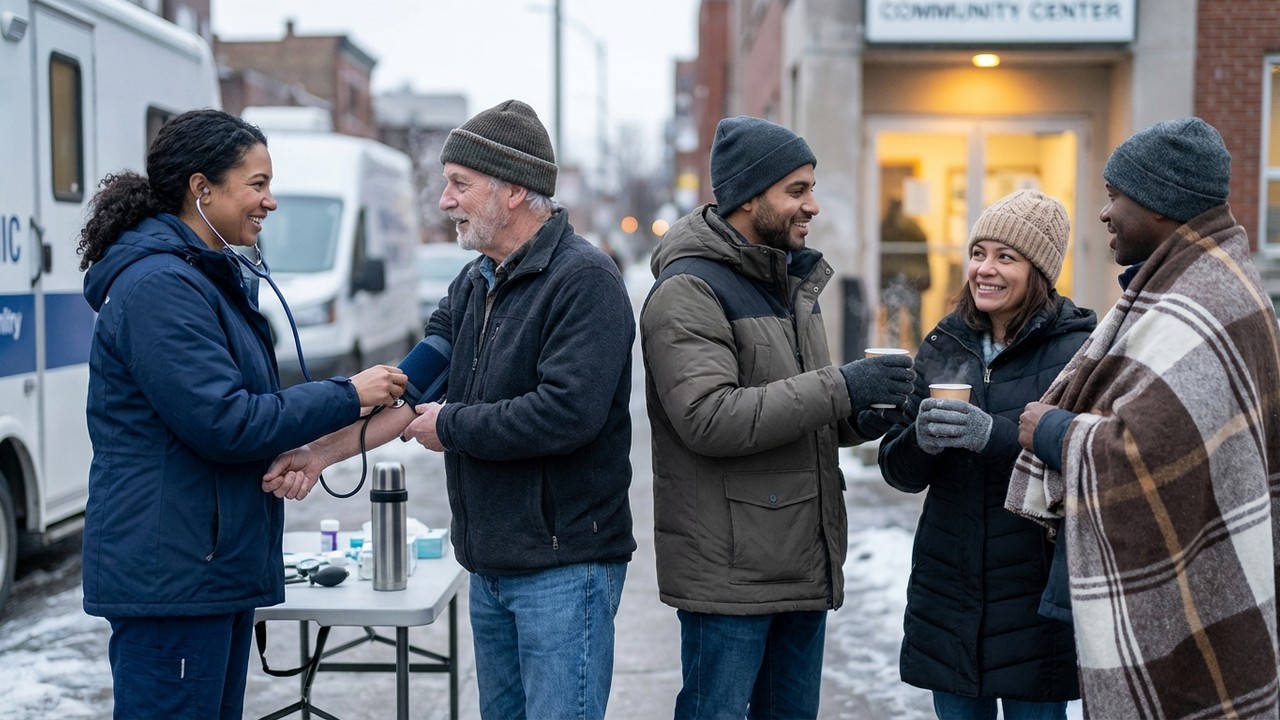
On a single January night in recent counts, more than half a million people in the United States had no place to call home. That statistic is not a number alone; it is parents, elders, and neighbors whose health risks multiply when shelter, care, and human connection vanish. National Alliance to End Homelessness and federal point-in-time reports document this reality and its growing health consequences.
Why this matters now
Homelessness intersects with public health, access, and equity. People without stable housing are less likely to receive preventive care, more likely to have chronic conditions unmanaged, and face higher exposure to infectious disease and extreme weather. Community health centers and street outreach programs are lifelines: the Health Resources and Services Administration reports federally supported health centers serve over 30 million people, including many experiencing housing instability (HRSA).
Evidence we cannot ignore
Social connection is health care. Research summarized by public health authorities links social isolation and loneliness to higher risks of heart disease, stroke, and premature death; connection can be a protective factor in recovery and disease prevention (CDC). The World Health Organization emphasizes that social determinants drive health inequities globally, meaning housing, income, and social ties shape who gets sick and who gets well (WHO).
"Care without connection is a missed opportunity. We treat conditions, but people heal when they are seen and supported."
That truth is part clinical and part humane. Organizations like the National Health Care for the Homeless Council pair medical care with outreach, mental health support, and housing navigation. Their work shows that integrated services reduce emergency visits and save lives.
What you can do today
Small actions build systems-level change. Consider these concrete steps:
- Donate or volunteer with local shelters or street clinics; direct support helps immediate needs and continuity of care.
- Support community health centers that serve people experiencing homelessness; find local centers through HRSA and organizations like NHCHC.
- Advocate for policies that expand housing-first programs, Medicaid coverage for integrated care, and funding for outreach teams by contacting local representatives.
- Connect—reach out to neighbors and volunteers. Social connection is a public health intervention.
There is reason for hope. Programs that combine housing, primary care, and social support reduce hospitalization and help people regain stability. When communities invest in connection as well as clinics, outcomes improve.
Take one step now: visit the National Alliance to End Homelessness to learn how to get involved (endhomelessness.org/get-involved) or find local health center resources through the Health Resources and Services Administration (findahealthcenter.hrsa.gov).
Public health, equity, and compassion are not abstract goals. They are choices we make every day when we fund clinics, knock on doors, donate time, or simply listen. Connection heals—let us act together.


