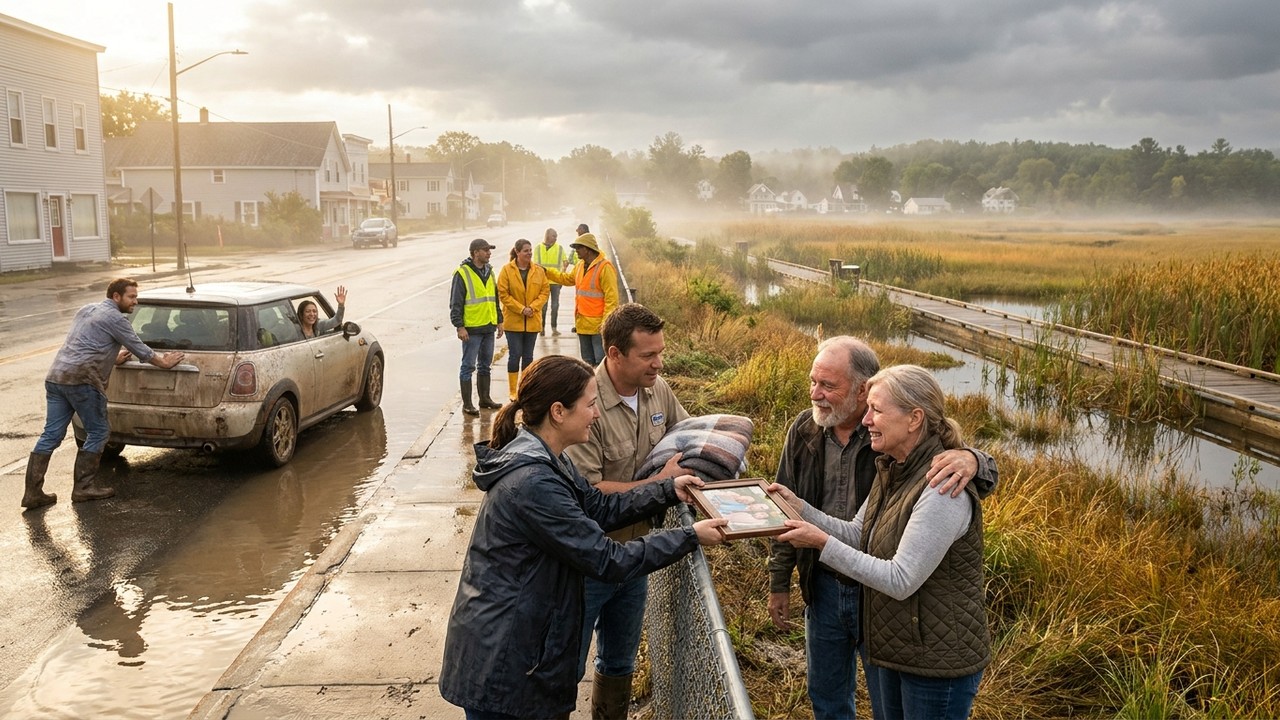
When floodwater began lapping at Main Street during a spring storm, neighbors instinctively ran to help each other—but it was the strip of restored marshland on the town edge that bought them the time to move cars, lift family photos, and breathe. This is not folklore: coastal wetlands and connected green spaces literally reduce surge and slow floods.
Coastal wetlands act as natural buffers that reduce storm surge and flooding and protect communities.
Source: NOAA
Why land and nature matter now
Climate science is clear: rising temperatures increase the frequency and severity of extreme weather that threatens homes, access to care, and public health. The IPCC AR6 outlines these escalating risks. At the same time, research and federal guidance show that nature-based solutions—wetland restoration, urban trees, and conserved watersheds—lower hazard impacts and support recovery (FEMA).
Where community, health, and crisis response meet
Protecting land is also protecting human wellbeing. Parks and green spaces improve physical activity, mental health, and social connection, especially in underserved neighborhoods (CDC). When disaster strikes, strong community networks plus accessible crisis services save lives—the 988 mental health lifeline launched in 2022 provides immediate crisis intervention nationwide (NAMI).
The Nature Conservancy and local land trusts are putting these ideas into practice: restoring coastal marshes, conserving watershed lands that secure drinking water, and partnering with communities to build resilience (The Nature Conservancy). For people facing disasters, nonprofits like the American Red Cross provide immediate shelter and recovery aid, while community groups deliver longer-term support.
How you can help—practical steps
- Volunteer or donate to trusted conservation groups such as The Nature Conservancy or find local land trusts via the Land Trust Alliance.
- Support nature-based infrastructure in your community—ask your local leaders to invest in green stormwater projects and wetland restoration (share FEMA guidance with officials: FEMA).
- Learn crisis resources: save the 988 number, train as a crisis responder, and connect neighbors to services like the 988 lifeline.
- Get outside—and bring others. Regular access to parks boosts health; join local cleanups, tree plantings, or community garden projects to build connection and resilience.
"Restoring land is restoring the safety net we all rely on—ecological, social, and emotional."
That safety net is repairable. Policy momentum for conservation targets, growing investment in nature-based resilience, and thousands of local volunteers show a path forward. If you want one immediate action, visit the Land Trust Alliance page to find a local organization to support, or give a one-time gift to groups restoring wetlands and urban green space to build lasting protection.
Hope is active. Protecting land protects lives. Join a local conservation effort, share crisis resources with neighbors, and press leaders to fund nature-based resilience. Small acts add up to a stronger tomorrow.