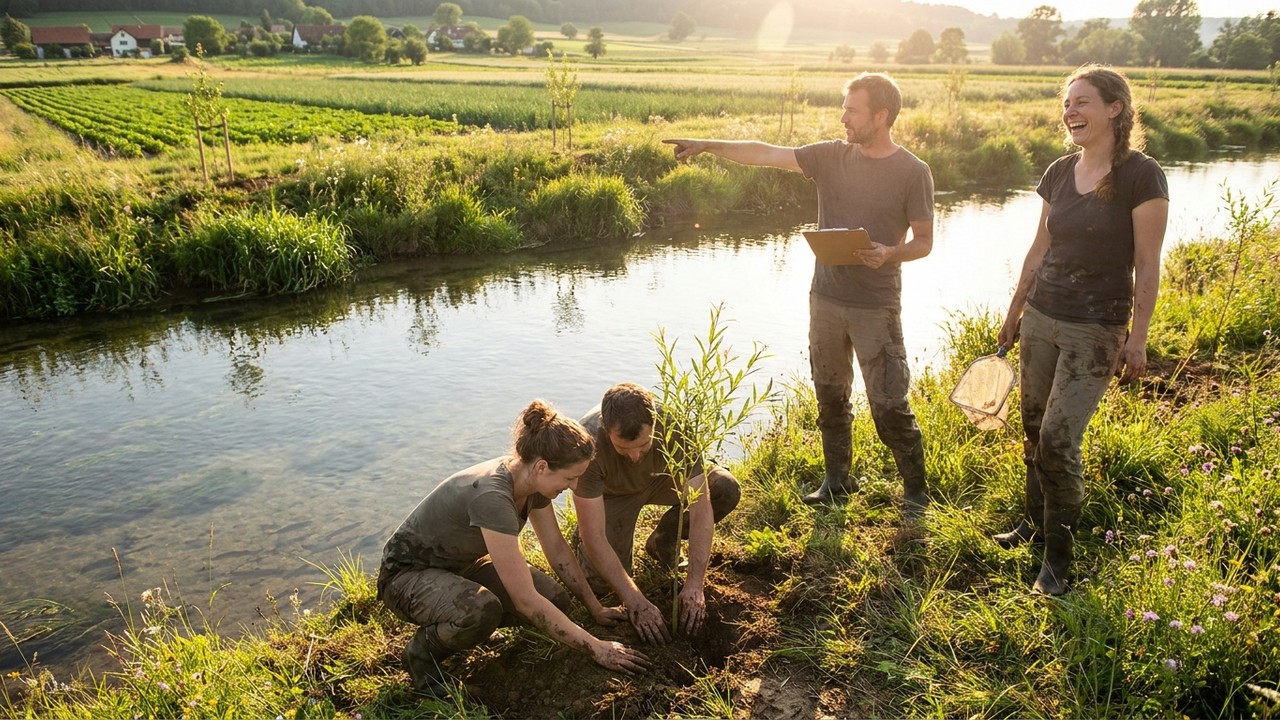
When the river returned to the valley, the village woke up. Crops that had failed for years began to yield again, fish returned to the shallows, and children who once left to find work in the city stayed to learn sustainable farming. That recovery is not an accident; it is the result of intentional river restoration and community stewardship.
Why rivers matter for food and health
Rivers are the arteries of landscapes: they feed soils, recharge groundwater, support fisheries and irrigated agriculture, and buffer communities from floods and drought. Yet recent assessments show progress toward ending hunger has stalled, and climate shocks combined with degraded water systems threaten food production and nutrition worldwide. See the 2024 United Nations report, The State of Food Security and Nutrition in the World 2024 for the latest analysis.
Restoring rivers is a practical, nature-based solution. Organizations like The Nature Conservancy document how reconnecting floodplains and removing barriers improves fish stocks, stabilizes irrigation, and increases resilience to extreme weather. Local networks such as The Rivers Trust combine science and volunteers to revive streams and protect drinking water.
Real-world wins, real human impact
Across continents, restored channels reduce flood damage, revive fisheries that feed families, and create microclimates for healthier crops. These projects are also acts of social responsibility: they protect the most vulnerable who depend directly on local ecosystems for food and income. Policy momentum is growing too — for example, regional restoration laws and targets now shape funding and project pipelines in places from Europe to North America. Read the EU's approach to restoring nature at the European Commission site: Nature Restoration Law.
"When rivers are healed, communities thrive."
How you can help — simple actions with big returns
Community and corporate action work hand in hand. Whether you are an individual, a company, or a nonprofit, you can move restoration from promise to practice:
- Support credible organizations that deliver on-the-ground results, such as The Nature Conservancy and local river trusts.
- Advocate for funding and policies that prioritize nature-based solutions and food security in local and national plans.
- Volunteer for riparian planting, invasive species removal, and citizen monitoring programs run by community trusts.
- Partner with food-sector actors to invest in watershed health as part of sustainable supply chains.
Restoration is not a single project; it is a commitment that links environmental stewardship, healthy living, and food security. The facts are clear: restoring rivers strengthens the natural systems families rely on and builds resilience to future shocks. Recent analyses and programs show this is feasible and effective — but they need support from people like you.
Take one small step today: visit a local river group, share their stories, or contribute time or funds. If you want a starting place, explore The Nature Conservancy's river work at their river restoration page or find a nearby project via The Rivers Trust. Hope is practical when it is organized into action.