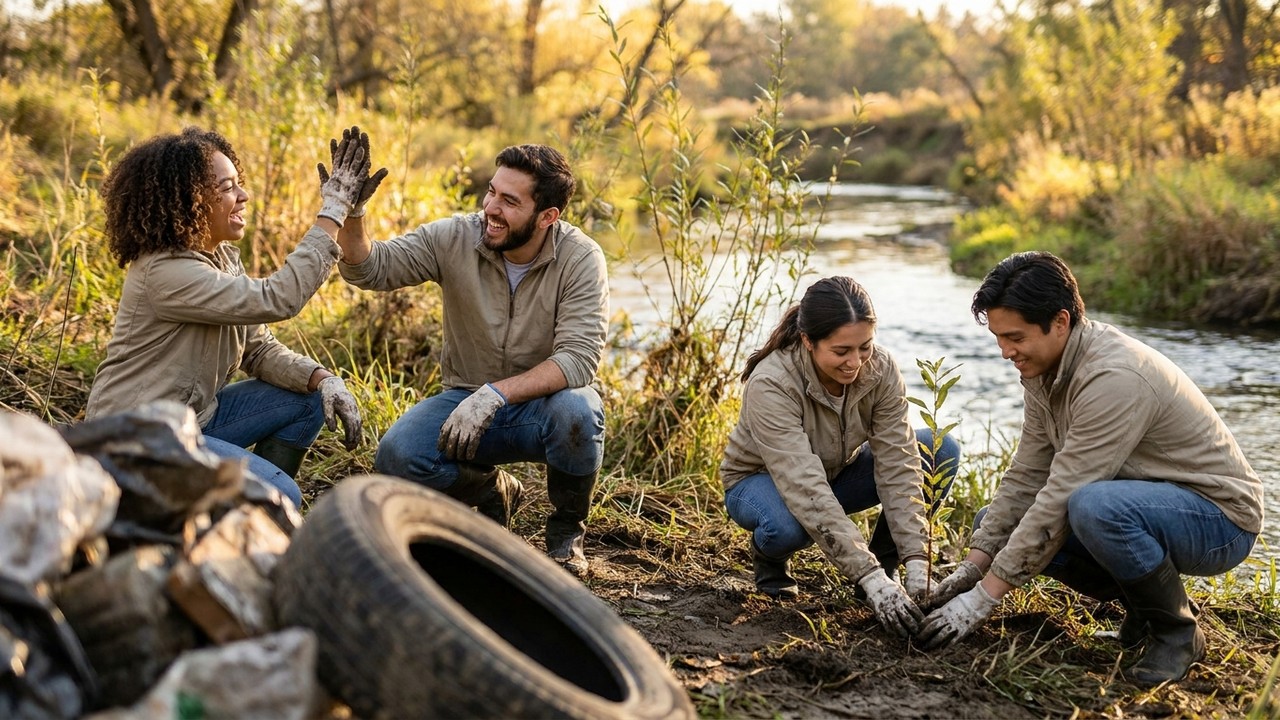
When a volunteer crew of high school students pulled a tangle of plastic and old tires from a neighborhood creek last summer, they did more than clear trash — they gave an injured watershed a breath of hope. Within weeks minnows returned to a stretch of stream that had been silent for years. That small, stubborn revival is an argument for investing in rivers, land, and young people now.
Why this matters
Freshwater life is in crisis. The World Wildlife Fund's Living Planet Report documented dramatic declines in freshwater species in recent decades, underscoring why river restoration and watershed protection must be urgent priorities. Read the report at WWF Living Planet Report.
Healthy watersheds protect drinking water, reduce flood risk, and support agriculture and wildlife. The U.S. Environmental Protection Agency highlights how green infrastructure and natural systems can dramatically reduce polluted stormwater and protect communities. Learn more from the EPA at EPA Green Infrastructure.
Who is stepping up
Nonprofits and community groups are turning hope into action. American Rivers partners on river restoration projects nationwide; The Nature Conservancy advances large-scale watershed and floodplain reconnection work; and the Corps Network connects youth and young adults to hands-on restoration jobs that build skills and stewardship.
"When you put young people in a river, they don't just fix the stream — they catch a sense of belonging to the place," a restoration leader told volunteers after a weekend project.
What restoration looks like
Restoration can be simple and local or part of bigger landscape conservation:
- Reconnecting floodplains to allow rivers to slow, spread, and sink water naturally.
- Planting riparian buffers of native trees and shrubs to filter runoff and shade waterways.
- Removing barriers like old dams and culverts so fish and sediment can move freely.
These actions also create training and career pathways for young people, turning environmental stewardship into durable livelihoods.
How you can help
Action is practical and immediate. Consider:
- Joining or supporting local river and watershed groups like American Rivers or community conservation corps via Corps Network.
- Volunteering for a stream clean-up, tree planting, or citizen science water monitoring event in your area.
- Contacting local leaders to prioritize green infrastructure and land conservation in planning and budgets.
Every small restoration adds up. When youth, communities, nonprofits, and policymakers act together we rebuild resilient watersheds that protect people and nature.
Hope is practical: tools, funding, and groups exist to make change now. Find a project, show up, give what you can, and tell your neighbors — rivers remember who cares for them.