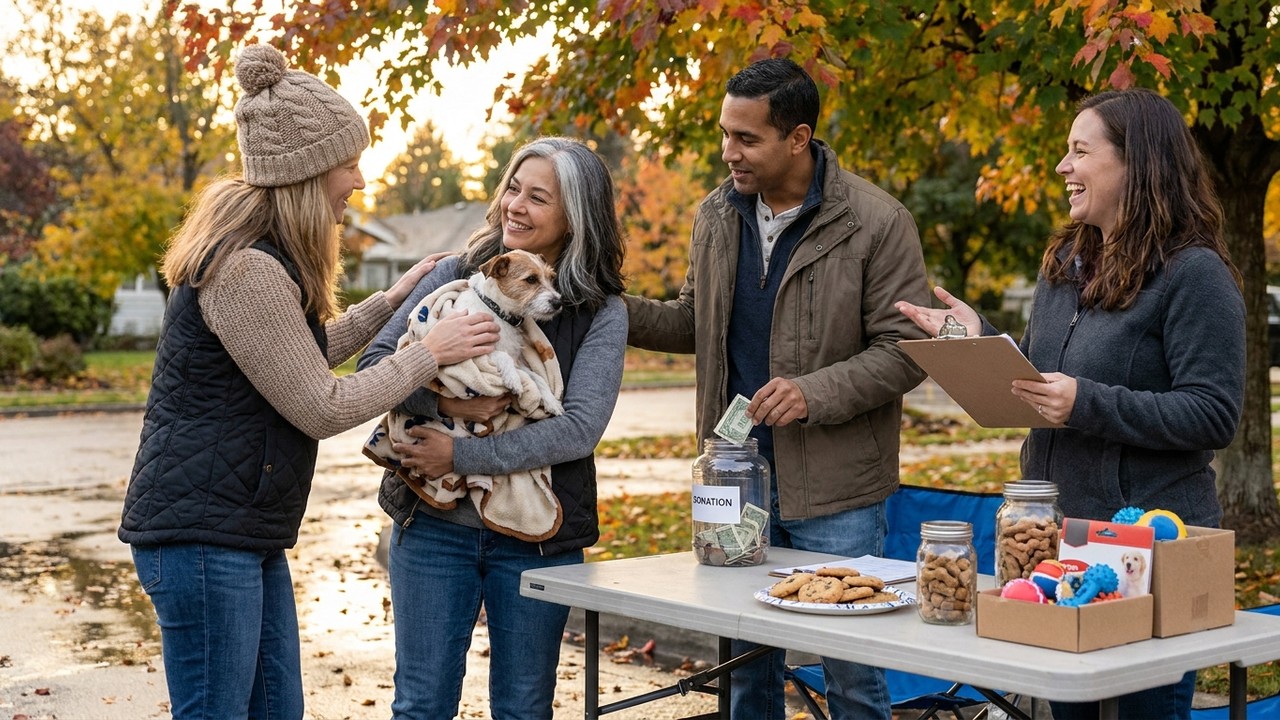
On a rainy November evening, 16-year-old Maya tugged a shaking terrier from under a grocery dumpster and refused to walk away. Within a week she had organized a neighborhood fundraiser, rallied school volunteers, and helped the dog find a foster home. That small act became a ripple—proof that community care and youthful energy can turn crisis into rescue.
Why this matters now
Animal homelessness remains a national challenge: the ASPCA estimates that about 6.3 million companion animals enter U.S. shelters every year. At the same time, young people are the largest generation in history—there are roughly 1.8 billion people aged 10 to 24 worldwide—an enormous reservoir of compassion and action.
Where fundraising and community support bridge the gap
Charitable giving powers shelters and rescue programs: according to Giving USA, Americans donated hundreds of billions to causes in 2022, enabling nonprofits to expand services, veterinary care, and foster networks. Organizations like Best Friends Animal Society are pairing data-driven shelter strategies with community fundraisers to reduce euthanasia and increase adoptions.
"When our neighbors fundraise, foster, or share a post, a life is saved," Maya said. "You don't have to be an adult to make that choice."
How teens and communities are already making a difference
From backyard adoption fairs to school-led microfundraisers, youth-led initiatives are creating measurable change. Young volunteers staff intake events, organize supply drives, and start social campaigns that move animals from shelter kennels to loving homes. These efforts are supported by nonprofits that provide training, foster-match systems, and low-cost clinics.
Simple actions you can take today
Every community member can help. Consider these steps:
- Adopt or foster: Give a homeless animal a home temporarily or permanently.
- Volunteer locally: Shelters need hands for cleaning, transport, and socialization.
- Fundraise: Host a bake sale, online drive, or neighborhood event to cover vet care.
- Share and educate: Use your voice to promote adoption and spay/neuter programs.
- Partner with youth groups: Schools and clubs can run sustainable support programs.
Want a practical next step? Visit Best Friends to learn about fostering and donate tools or funds, or check ASPCA resources for local adoption options. Links: Best Friends Animal Society, ASPCA.
Hope is not abstract. It is a foster couch, a volunteer shift, a dollar from a neighbor, or a teen who refuses to look away. When communities empower youth and channel fundraising into frontline care, homeless animals get second chances.
Take action now: volunteer, donate, or organize a youth-led fundraiser this month. Small groups change shelter outcomes; your neighborhood can be next.