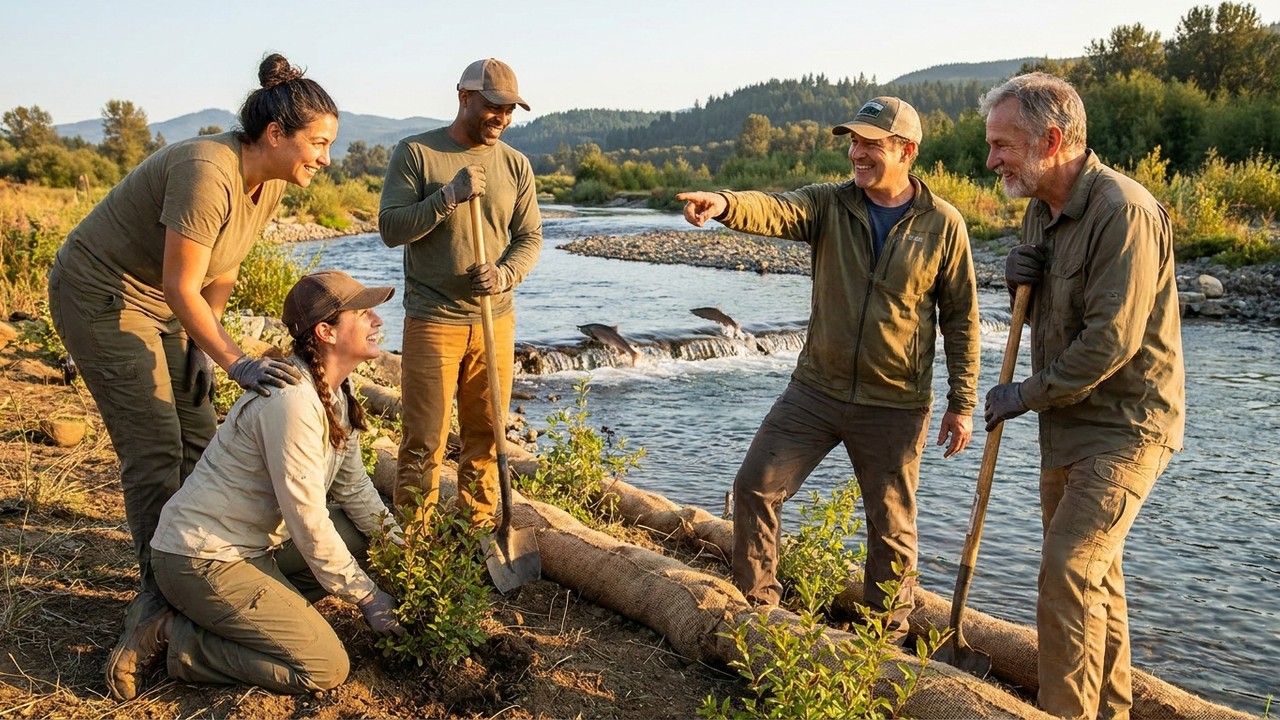
When the Elwha River's two century-old dams came down, salmon returned within months and a grieving shoreline began to heal — a vivid reminder that people can undo what once seemed irreversible. More than 1,800 dams have been removed in the United States since 1999, reconnecting habitat and restoring flows (American Rivers).
Watersheds are more than maps — they are community lifelines. As climate change reshapes rainfall patterns, heavy precipitation events have increased across the United States, intensifying floods and erosion that damage watersheds and human lives (EPA). Protecting upstream wetlands, riparian buffers, and healthy soils reduces flood peaks, filters pollution, and keeps rivers functioning for people and wildlife.
River restoration is not just ecological; it is social. The Elwha project remains a benchmark for how removal and reconnection bring back fish, cultural practice, and local economies (National Park Service). Organizations such as American Rivers and The Nature Conservancy are combining science, policy, and community partnership to scale these wins.
When waters break, people break too
Floods and droughts create immediate physical danger and long-term mental-health strain. The CDC documents how disasters can trigger anxiety, depression, and post-traumatic stress, especially where social protections are thin (CDC). The American Red Cross and local crisis teams provide rapid intervention and psychological first aid after events (Red Cross). Effective watershed work includes this crisis response: people must be safe and supported while landscapes recover.
"Healthy rivers mean healthier communities — ecological recovery and human resilience go hand in hand."
What you can do now
- Volunteer for local river cleanups or dam-removal support through American Rivers.
- Support watershed protection projects at The Nature Conservancy or your regional land trust.
- Prepare and learn crisis response: take trainings from the Red Cross and use CDC guidance for mental-health recovery.
- Advocate for funding: urge representatives to invest in green infrastructure and healthy-watershed programs at the EPA and state level (EPA Healthy Watersheds).
Restoration is both practical and hopeful: reconnecting streams can bring back fish runs, reduce flood damage, and restore a sense of place. These are tangible wins that show policy, science, and communities working together can heal landscapes and lives. Join a cleanup, donate to a local project, or train to help your neighbors after a disaster — small acts multiply into resilience.