
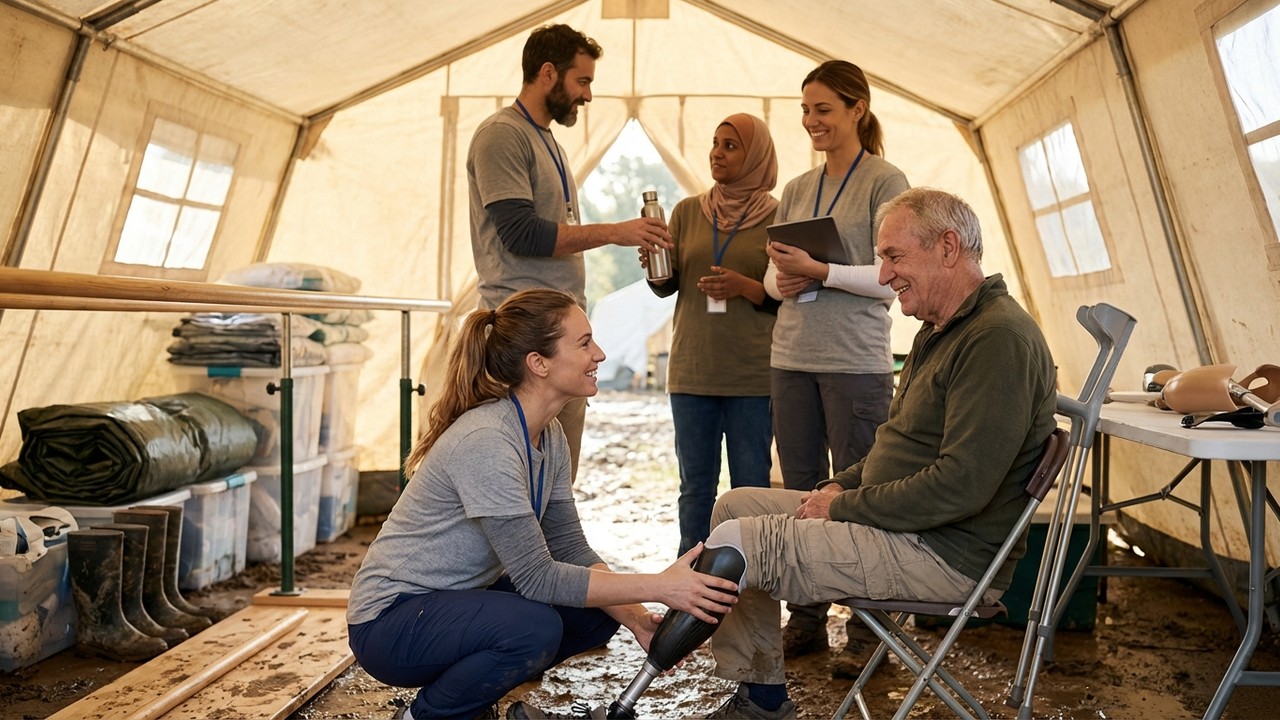
Imagine a nine-year-old girl named Amina, carried from a flooded village, her leg trapped under debris, the closest clinic overwhelmed. In the chaos of crisis, children with disabilities are often invisible—cut off from rescue, separated from families, and denied the rehabilitation that could change their lives.
This is not rare. The World Health Organization estimates that more than 1 billion people worldwide live with some form of disability — roughly 1 in 8 people — and many face heightened risks during emergencies. WHO: Disability fact sheet
The stakes for children
Children with disabilities face disproportionate threats in crises: they are more likely to be excluded from education, separated from caregivers, and subjected to violence or neglect. UNICEF documents how disability magnifies vulnerability in emergencies and calls for inclusive protection and services. UNICEF: Children with disabilities
In many countries, child safety nets are frayed. The CDC highlights child maltreatment as a persistent public-health issue that worsens under stress, such as during natural disasters or displacement. CDC: Child maltreatment prevention
What the field is doing now
Humanitarian and advocacy groups are adapting. The International Committee of the Red Cross runs physical rehabilitation centers in conflict and disaster zones, providing prostheses, therapy, and community reintegration. ICRC: Physical rehabilitation
Organizations like Save the Children and Leonard Cheshire work to keep children safe, ensure inclusive education, and restore services after crises. National disability advocates, such as the National Disability Rights Network, press for legal protections and accessible emergency planning. Save the Children Leonard Cheshire NDRN
"In emergency response, inclusion is lifesaving — and rehabilitation rebuilds futures."
How you can act today
Small, sustained actions make a huge difference. Consider these practical steps:
- Support proven organizations: Give to groups that deliver inclusive relief and rehabilitation on the ground, such as ICRC or UNICEF. UNICEF
- Advocate for inclusive policy: Ask local and national leaders to fund disability-inclusive emergency planning and child protection programs.
- Share trustworthy information: Raise awareness about the unique risks faced by children with disabilities in crises; accurate resources include WHO and CDC pages. WHO CDC
- Know crisis support: In the U.S., the 988 Lifeline helps people in crisis and connects to local services; support for caregivers and youth in crisis is expanding. SAMHSA: 988 Lifeline
When we center the needs of children with disabilities in preparedness, rescue, and rehabilitation, we not only save lives but restore dignity and potential. Amina's recovery—therapy, a prosthetic, a place back in school—was possible because responders prioritized inclusion. That model can and must scale.
Hope is practical: inclusive planning, funded rehabilitation, and community advocacy turn tragedy into renewed possibility. Join a proven organization, push for inclusive policy, or simply share this message—so the next child in crisis is seen, reached, and healed.


