
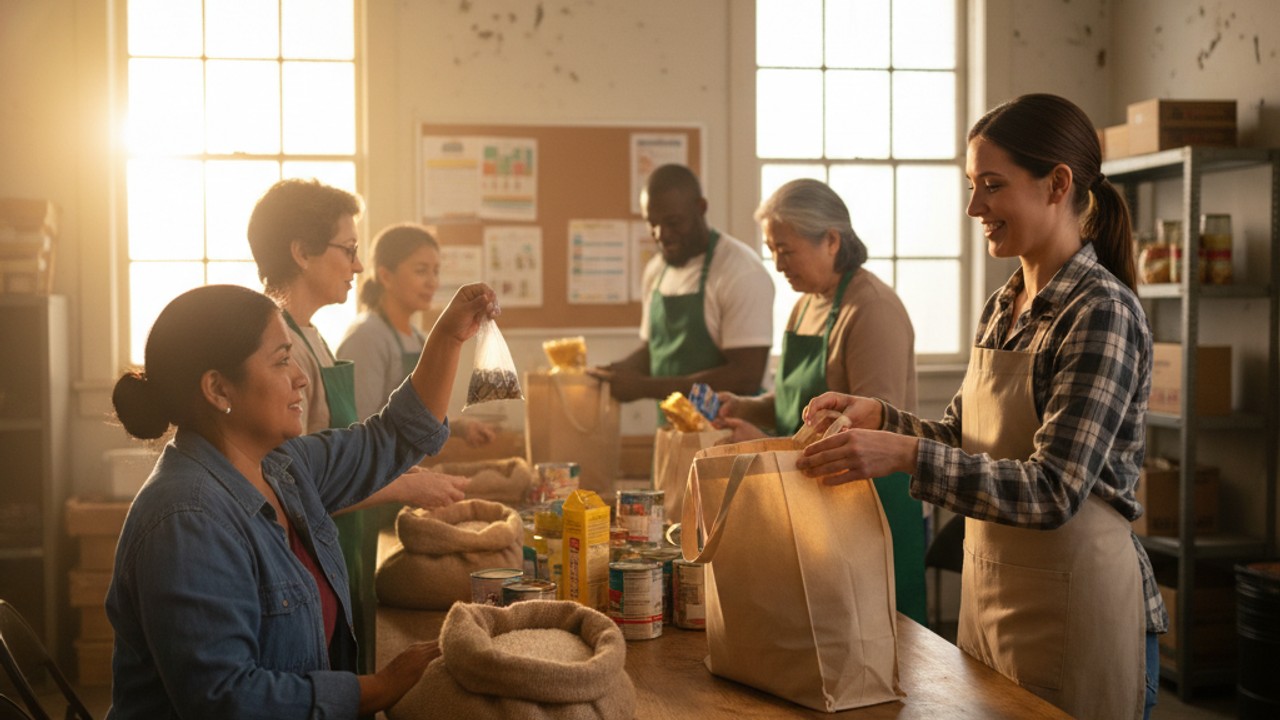
She arrived at the pantry at dawn with two children and a plastic bag of coins. Across the table, volunteers packed rice and canned goods while a lit bulletin board showed a sobering fact: nearly 735 million people faced hunger in 2022 — a trend FAO warns is driven by conflict, climate shocks, and economic pressure (FAO SOFI 2023).
Why this matters now
Global crises compound local vulnerabilities. The United Nations Office for the Coordination of Humanitarian Affairs reported that roughly 339 million people were expected to need humanitarian assistance in 2024, a figure that includes those forced from homes, cut off from livelihoods, or suddenly unable to secure food (GHO 2025). For people in underserved neighborhoods, a single job loss or storm can mean the difference between enough and none.
People and organizations on the front lines
Nonprofits bridge the gap between crisis and safety. The World Food Programme responds to large-scale emergencies and runs school meal and nutrition programs. In the United States, networks like Feeding America coordinate food banks that feed communities year-round. Groups such as the International Rescue Committee combine crisis response with resettlement and livelihood support to help families rebuild.
These organizations show what targeted, sustained help can do: keep a child in school with a meal, secure a family's income after displacement, and provide immediate crisis intervention that prevents long-term harm.
How you can act today
Small actions scale:
- Donate to proven organizations — for example WFP or Feeding America.
- Volunteer or partner with local food banks and community kitchens. Find opportunities via VolunteerMatch or your local food bank.
- Support crisis intervention services and mental-health hotlines used during emergencies, and push for sustained funding from local representatives.
"A single meal today can keep a family from losing tomorrow."
It is easy to feel overwhelmed by global numbers. But every donation, hour volunteered, and call to an elected official shifts the balance. Hope is practical: it is food delivered, shelters opened, and systems changed. If you can, give once this month; if you cannot, share information, sign petitions for stronger safety nets, or bring food drives to your workplace.
Start with one link: choose an organization above, click through, and take one action. That plastic bag of coins that woman carried is a reminder: small things add up when a community moves together. We can reduce hunger, strengthen crisis response, and lift up underserved neighbors — one coordinated, compassionate step at a time.


