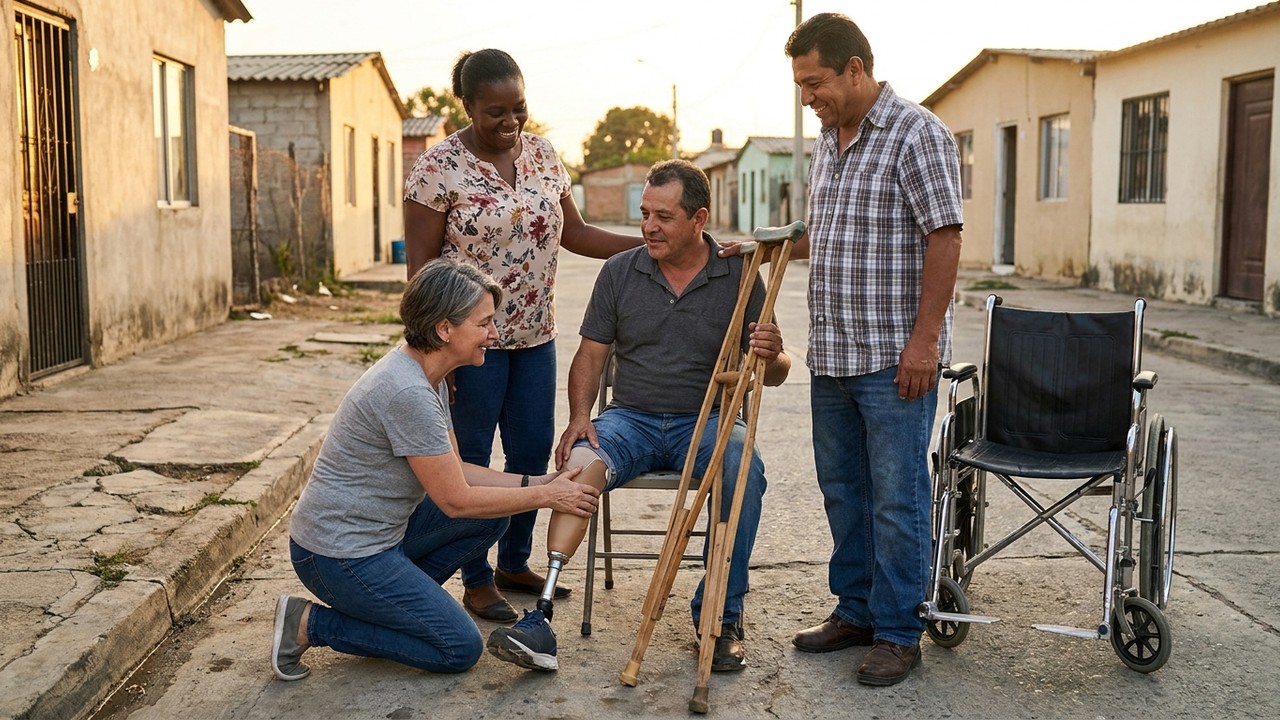
When twelve-year-old Asha returned from the hospital with a mismatched pair of crutches and a small plaster cast, her street became both a classroom and a therapy space. Her neighbors watched as she learned to step, to laugh, and to imagine a future beyond the accident that nearly closed every door. Stories like Asha's are common: recovery depends not only on medicine but on access, community care, and durable rehabilitation.
Why this matters now: the World Health Organization reports that more than 1 billion people, about 15 percent of the world population, live with some form of disability, and many struggle to access services they need (WHO: Disability and Health). At the same time, access to essential health services remains out of reach for millions (WHO: Universal Health Coverage), making rehabilitation and long-term care urgent priorities.
From triage to long-term dignity
Emergency medicine can save lives; rehabilitation restores lives. Rehabilitation services—from physiotherapy and prosthetics to inclusive community programs—help people return to school, work, and family roles. Organizations such as Humanity & Inclusion and Médecins Sans Frontières are providing prosthetic clinics, mental health support, and community-based rehabilitation in conflict zones and low-resource areas, demonstrating that targeted programs can change trajectories.
No one should be left behind.
Children are particularly vulnerable: interruptions in care, school, and social support multiply the harm. UNICEF data show persistent gaps in child survival and health services globally (UNICEF: Child Survival). A child who receives timely rehabilitation is not just healthier—she is more likely to stay in school and become economically independent.
What the numbers tell us
Facts to hold: WHO estimates that rehabilitation is needed across all age groups and conditions; yet many countries lack trained personnel and affordable services (WHO: Rehabilitation). These gaps widen inequality and trap families in cycles of care costs and lost income.
But numbers also point to solutions: community-based programs and task-sharing expand reach quickly. Small investments in assistive devices, local therapy training, and outreach can deliver outsized returns—restoring independence and reducing long-term costs.
How you can help right now
- Donate to trusted organizations such as Humanity & Inclusion or Médecins Sans Frontières to support prosthetics, rehabilitation, and field clinics.
- Volunteer with local community support groups to offer inclusive education, transport, or peer rehabilitation networks.
- Advocate for universal health coverage and funding for rehabilitation with local leaders—small policy shifts unlock services for thousands.
Asha's second step came not from a hospital alone but from neighbors who cleared pathways, a local volunteer who practiced exercises with her, and a small NGO that provided a proper prosthetic. That ecosystem of care is replicable and affordable when communities and institutions act together.
If you leave this story with one thought, let it be this: access to rehabilitation and inclusive health services is a reachable goal. Support organizations doing the work, push for policies that fund long-term care, and lend your hands or voice. Together we can turn one small recovery into many.
Take action today: visit the WHO rehabilitation facts page, consider a donation to a field partner like Humanity & Inclusion or MSF, and connect with local community support groups to start change where you live.