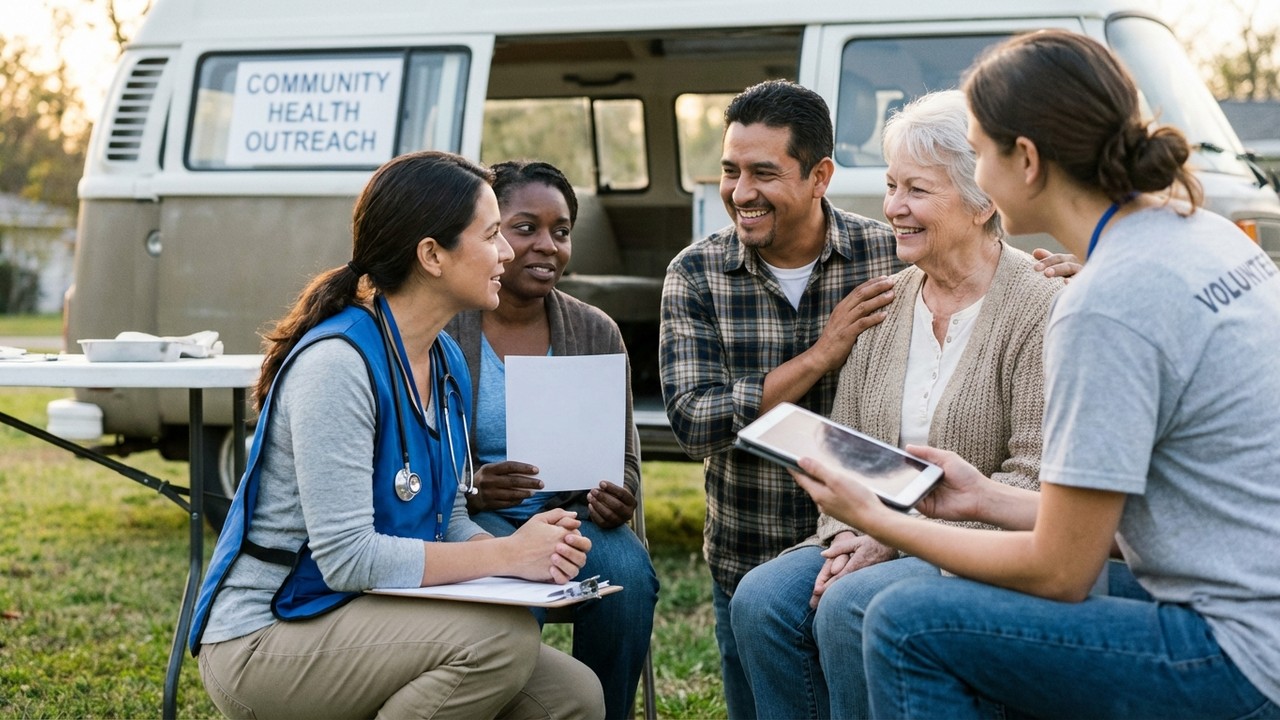
When Maria skipped a week of wages to pay rent and then postponed a doctor visit because a co-pay would have been another paycheque, she joined millions making impossible choices. About 28 million people in the United States were uninsured in 2022, a gap that forces real families to delay care and fuels preventable suffering. (U.S. Census Bureau)
Where the gap shows
Health access is not just a policy line item; it is daily life. The World Health Organization notes that at least half the world’s population still do not have full coverage of essential health services, underscoring a global crisis of access and equity. (WHO) Back home, disparities are stark: maternal mortality and other outcomes disproportionately affect Black, Indigenous, and low-income communities. The CDC details these disparities and the urgent need for targeted action. (CDC)
How communities and nonprofits respond
Across the country, community health centers are a lifeline. Federally supported centers serve more than 30 million patients annually, delivering primary care regardless of ability to pay. (National Association of Community Health Centers) Internationally and on the ground in hard-to-reach places, organizations like Partners In Health combine clinical care, community engagement, and advocacy to expand access and tackle social determinants that drive inequity.
"The idea that some lives matter less is the root of all that is wrong with the world." — Paul Farmer
That sentence is a call to conscience. Public health advances—vaccination campaigns, community outreach, mobile clinics, and culturally competent care—work best when communities lead and systems listen.
What the data tells us
Cost barriers drive avoidance of care. KFF analysis shows persistent gaps in coverage and affordability that correlate with worse health outcomes and higher long-term costs. (KFF) These are solvable problems when funding, policy, and grassroots energy align.
How you can help today
Small actions add up. You can support access and equity where you live and around the world:
- Give to trusted organizations expanding care, for example Partners In Health or your local community health center.
- Volunteer at a neighborhood clinic or become a community health worker to bridge language and trust gaps.
- Advocate for policies that expand coverage and fund public health—find your representative and tell them access matters: Find your Representative.
- Share stories. Community voices change minds. Lift a neighbor's experience and demand dignity in care.
There is reason for hope: community health centers and focused nonprofits have already improved access for millions. With sustained support—financial, political, and personal—we can turn stories like Maria's into ones where timely care is the norm, not the exception.
Take one step today: learn more, donate, or reach out to your local clinic. Action is the bridge between crisis and change.