
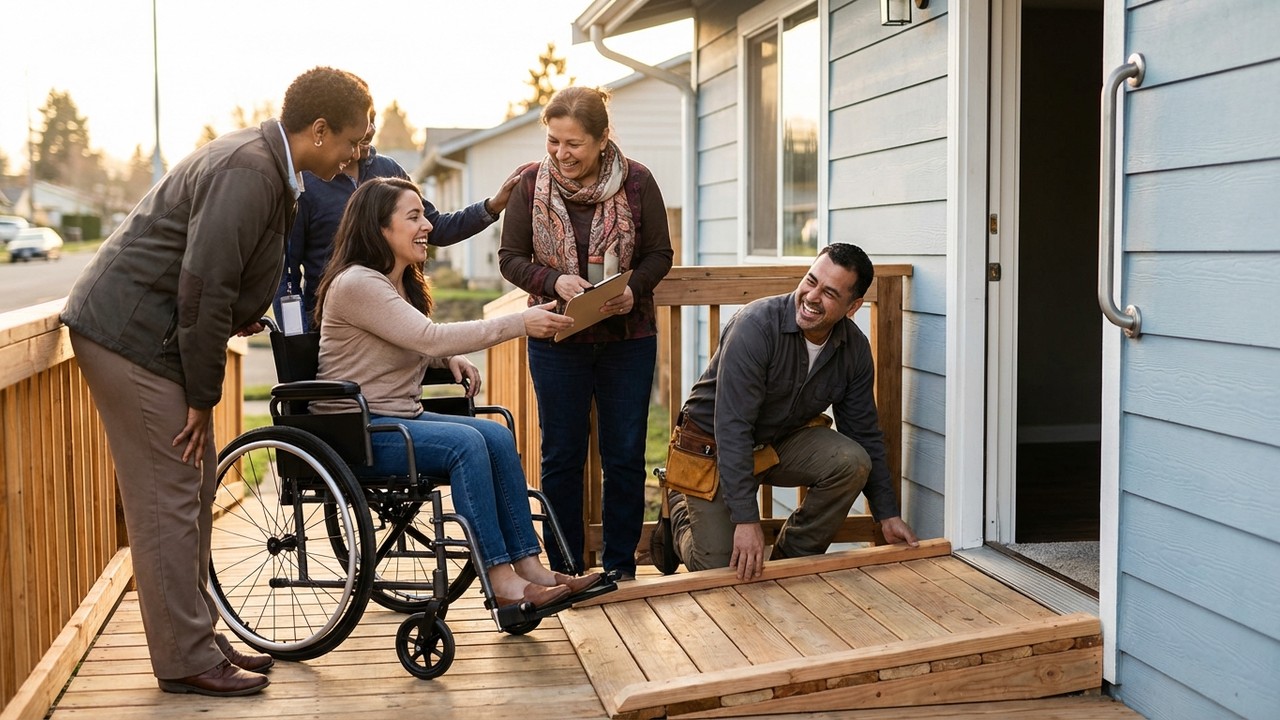
When Amina left the hospital with her son, the list of appointments in her hand felt smaller than the stack of barriers outside her door: inaccessible transit, a landlord who refused reasonable modifications, and rent that outpaced every paycheck. This is not a lone story — it is the lived reality at the intersection of disability, housing instability, and gaps in health access.
Why it matters now
More than 1 billion people worldwide experience some form of disability, according to the World Health Organization — roughly 15 percent of the global population — and many face avoidable obstacles to care and participation in daily life. WHO: Disability and health
At the same time, health systems still leave people behind: the WHO reports that nearly half the world lacks access to essential health services — a gap that compounds when people also lack stable, accessible housing. WHO: Universal health coverage
In the United States, housing affordability remains a persistent crisis and drives instability for families who also need health and disability supports. The National Low Income Housing Coalition documents the affordability squeeze that puts safe homes out of reach for millions. NLIHC: Out of Reach
People and organizations making a difference
Across cities and countries small and large, nonprofits are building bridges where systems fall short. Habitat for Humanity helps secure affordable, accessible housing; Habitat for Humanity works with families to create stable homes that improve health outcomes. Doctors Without Borders (MSF) reaches people with urgent healthcare where systems are fragile. Doctors Without Borders provides care that saves lives and preserves dignity.
Organizations focused on disability support, like Easterseals, provide services that enable people to work, learn, and live independently. These groups show how targeted support reduces long-term costs and restores hope.
What you can do today
- Give time or funds: Volunteer with local housing programs or donate to nonprofits focused on accessible housing and health services.
- Advocate: Contact local representatives to support policies that expand affordable, accessible housing and universal health coverage.
- Educate your community: Share reliable resources and stories to reduce stigma and build inclusive neighborhoods.
"Access to a safe home and basic health services is not generosity — it is the foundation of human dignity."
When neighbors like Amina gain access to an affordable, accessible home and consistent care, children stay in school, medical crises become manageable, and communities grow stronger. Progress is possible: organizations and advocates are achieving wins every day, from accessible modifications to community-based care pilots.
Take one action now: visit a trusted organization, sign a local petition, or set up a small monthly gift. Even a single conversation with a policymaker or a few volunteer hours at a local shelter moves the needle.
We write this not to tally failures but to invite hopeful action. Systems can change when people insist on dignity for all. Join the work: build homes, expand health access, and ensure support for people with disabilities. Your voice matters.


