
More than 1 billion people worldwide live with some form of disability, and among them are millions of children whose access to school, therapy and safety is disrupted by conflict, disaster or poverty. WHO estimates that disability is a global reality — and one that intersects every crisis.
Imagine a child named Amina as a composite of thousands: she survived a flood that destroyed her home, lost mobility after an injury, and then found the nearest rehabilitation clinic closed because of stretched resources. Without assistive devices, therapy or child-focused protection, her childhood narrows to survival. This is not an isolated story — it is repeated across displacement camps, low-resource towns and inner cities.
Facts that demand action
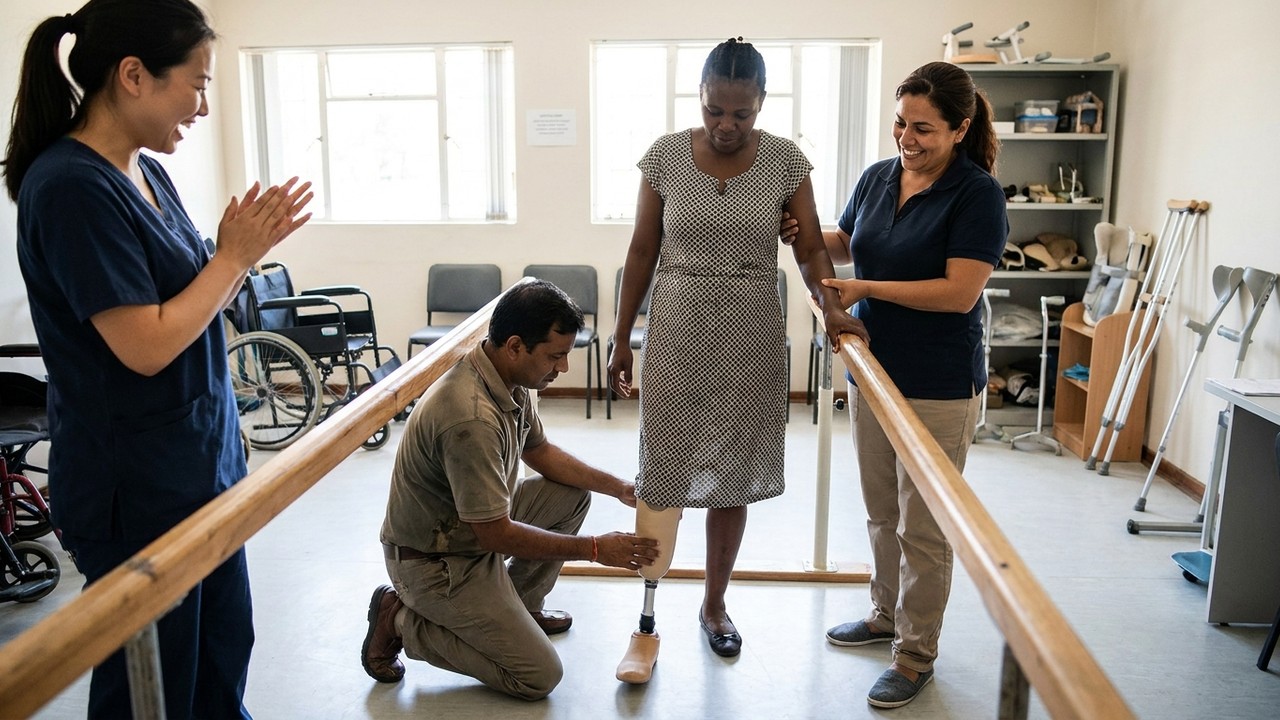
Rehabilitation and assistive care are not optional. WHO and partner reports show enormous, unmet global need for rehabilitation and assistive technology — gaps that widen in crises where services collapse. Practical help from specialized non-profits makes measurable differences. Organizations such as CBM Global focus on disability-inclusive health and rehabilitation, and groups like Save the Children work to protect children in emergencies and restore learning and psychosocial support.
Recent reporting and humanitarian summaries repeatedly show that children with disabilities are among the most likely to be left behind in emergency response and recovery planning. That exclusion increases their risk of abuse, neglect and lifelong poverty.
What works: integrated, child-centered response
Effective programs combine:
- Early crisis intervention and child protection integrated with rehabilitation and assistive technologies
- Community-based rehabilitation that trains local workers and families
- Inclusive education and psychosocial support so children return to normal routines
Examples: CBM Global runs inclusive health and assistive devices programs in fragile settings, and Save the Children integrates protection and rehabilitation into emergency response to get children back to safety and school. See CBM's program pages at cbm.org/what-we-do and Save the Children's emergency work at savethechildren.org/emergency-response.
Simple actions, powerful results
You can help restore childhood and independence right now:
- Donate to or volunteer with reputable organizations that deliver assistive devices and child protection in crises (see links above)
- Advocate for disability-inclusive emergency planning with your local representatives and humanitarian funders
- Support community rehabilitation training so care is available where crises strike
"When a child gets back to school with a supportive device and a caring teacher, you see hope return—not just mobility but possibility."
Stories like Amina's become less common when donors, policymakers and communities prioritize rehabilitation and inclusive child protection. Progress is possible: targeted funding for assistive technology, training of community rehabilitation workers, and inclusive emergency planning all deliver measurable gains.
Take one step today: visit CBM Global or Save the Children to learn how donations and advocacy fund rehabilitation, assistive devices and child protection in emergencies. Together we can make sure every child has a chance to heal, learn and belong.


