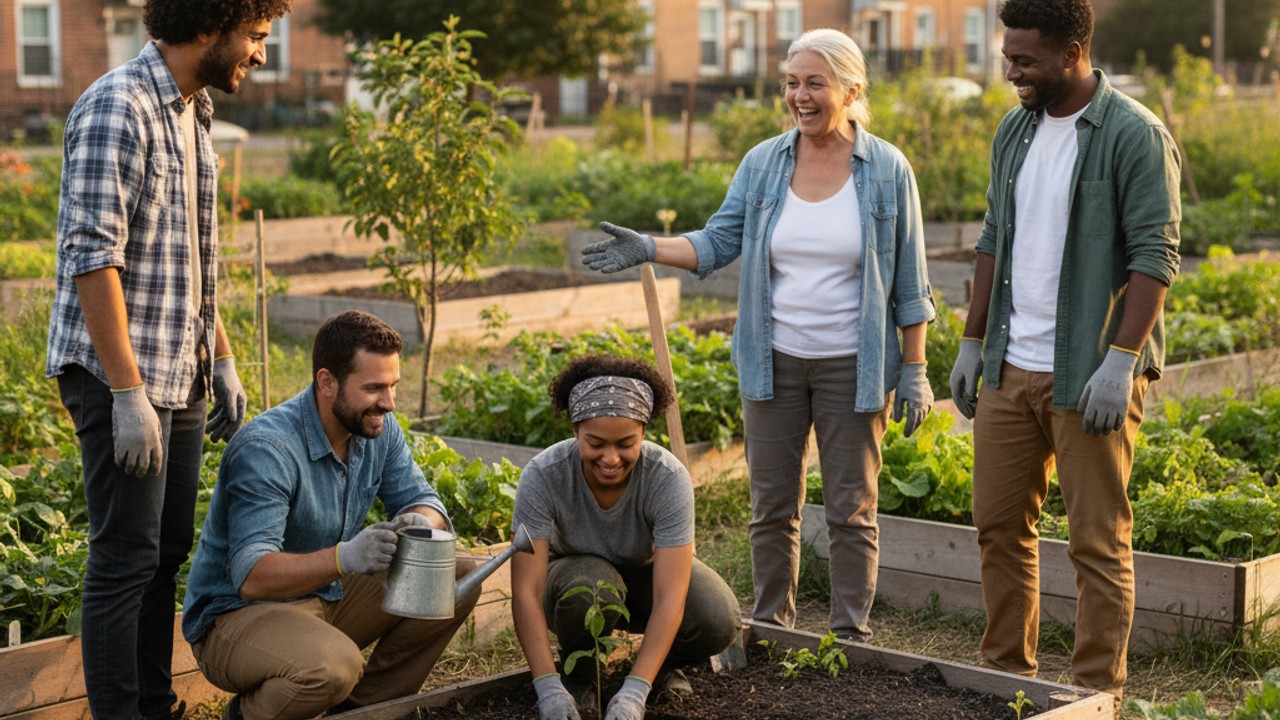
When 16-year-old Maya planted her first sapling on a vacant lot turned community garden, she thought she was just putting a tree in the ground. Months later she saw neighborhood kids trading screens for soil, elders sharing recipes under new shade, and a local clinic reporting calmer afternoons. That small act rippled into healthier bodies, stronger ties, and a renewed sense of responsibility for the land.
Why land and youth together matter
Access to green space is not a luxury — it is public health infrastructure. The World Health Organization highlights clear links between urban green spaces and physical and mental health outcomes, noting benefits like reduced stress and improved well-being (WHO: Urban green space and health). The CDC also recommends that children ages 6-17 have 60 minutes of physical activity daily, a goal that is far easier to reach when parks and safe outdoor spaces are nearby (CDC physical activity for children).
What recent reports are telling us
Park access remains uneven in U.S. cities. The Trust for Public Land's ParkScore project maps that reality and shows where investments still fall short, highlighting communities that need parks most (Trust for Public Land ParkScore). At the same time, land trusts and community groups are stepping up to protect and restore local places via conservation easements, urban greening, and youth programs.
Organizations turning hope into action
The Student Conservation Association (SCA) trains young people in hands-on conservation work, pairing job skills with stewardship and civic engagement (SCA). The Land Trust Alliance supports local land trusts that preserve farms, forests, and neighborhood greenspace (Land Trust Alliance). These groups show that land conservation, youth development, and community health can advance together.
How you can join the movement
Small steps build momentum. Consider these practical ways to act:
- Volunteer with local conservation crews or youth programs like SCA to mentor and learn.
- Support local land trusts with donations or by attending town meetings that shape park access.
- Create or help maintain a pocket park, community garden, or tree-planting day with neighbors and schools.
- Advocate for funding equitable park access and outdoor programming in schools and municipalities.
"When young people care for a place, that place cares for them back."
The stories of teens like Maya are not rare; they are models. Protecting land creates spaces for play, learning, and healing. Engaging youth builds the next generation of stewards, workers, and community leaders. And when neighborhoods gain parks, everyone gains health.
Take one step this week: find a local park or conservation group, sign up for a volunteer day, or bring the idea of a community green space to your local school board. Small roots become strong trees — your action can start the change.