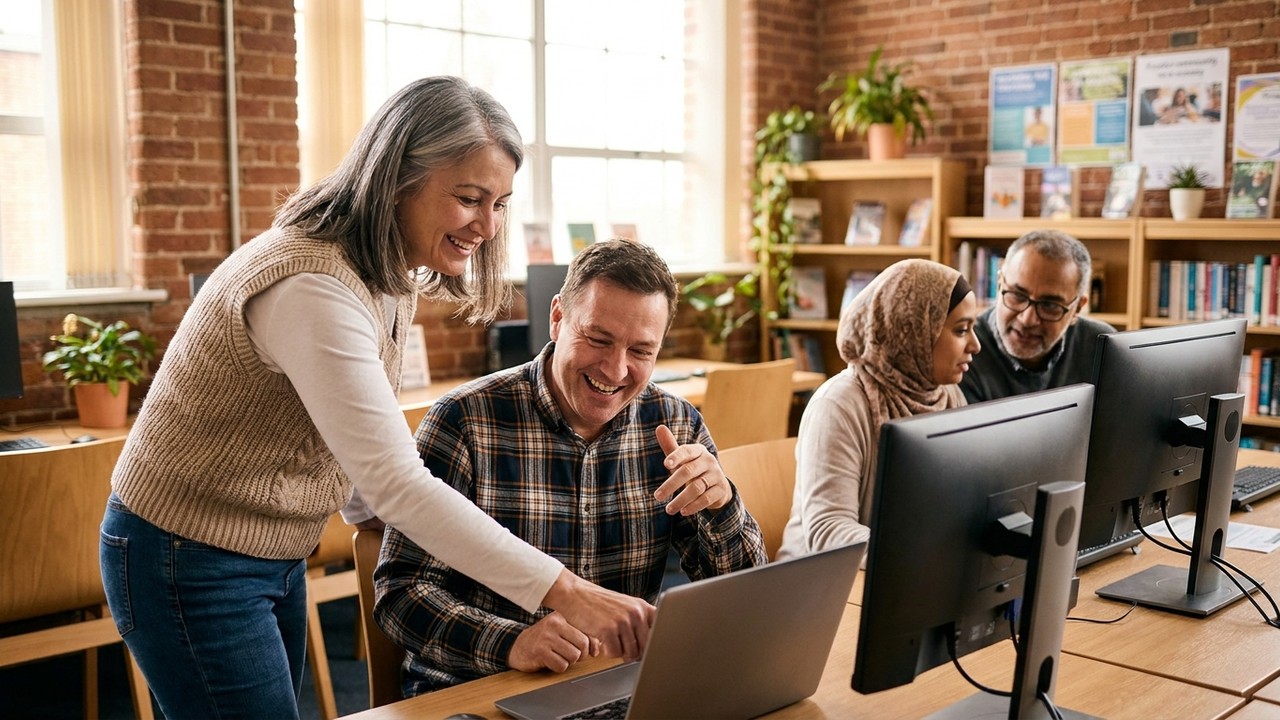
When Amina first stepped into her town's refurbished library, the computer hummed and a world opened: her first search, her first coding puzzle. That small moment is a lifeline for millions — and a reminder that access to technology transforms lives.
Why this matters now
Nearly half the world remains offline. According to global connectivity data, about 2.9 billion people still do not use the internet, a gap that deepens inequalities in education, jobs, and civic life. See the International Telecommunication Union's data and facts for context: ITU Facts and Figures. The World Bank emphasizes digital development as central to poverty reduction and growth: World Bank: Digital Development.
Real organizations doing real work
Nonprofits and community networks are closing gaps today. Code.org brings computer science to schools and millions of students, helping make technology education tangible. The Internet Society supports community networks that build local infrastructure where commercial providers do not reach. Digital Opportunity Trust trains young leaders to deliver digital skills in under-resourced communities.
"We learned to build a website from scratch and then used it to advertise local services — suddenly our neighbors could find us online." — a community volunteer
What the numbers tell us
Digital access is not only about connectivity; it is about opportunity. Access gaps are compounded by education and gender divides. Targeted community outreach and technology education generate measurable progress: schools with sustained digital programs report higher retention and more pathways into technical jobs. For program models and partnerships, see UNESCO's work on ICT in education: UNESCO ICT in Education.
How you can help, today
Small actions add up. Consider these steps:
- Volunteer time to teach digital skills at a local library or community center.
- Donate to proven nonprofits like Code.org or Digital Opportunity Trust to fund curricula and leadership programs.
- Advocate for public investment in community networks and school connectivity with local officials.
- Support device donation and refurbishment programs to get hardware into classrooms and homes.
Hope is not abstract. Community hubs, volunteer instructors, and resilient local networks are already shifting futures. If Amina's first search led her to new opportunities, imagine thousands more taking that first step when communities and organizations act together.
Join the movement: connect a learner, support a local hub, or amplify policies that prioritize digital access. Every connection is progress.