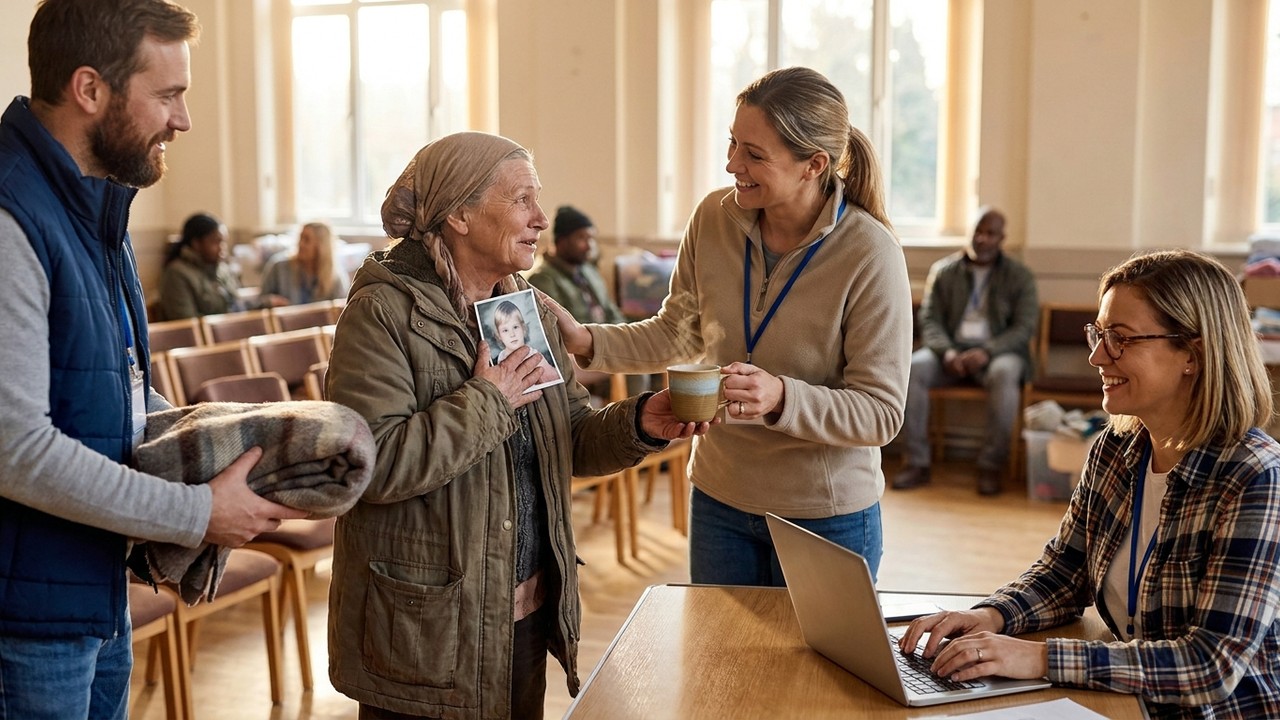
When Amina stepped from the bus into a crowded reception hall, she held only a small bag and a photograph of a child she had been separated from. Volunteers offered tea, a warm blanket and a promise: someone would look for her family. That single moment—human hands meeting someone in crisis—captures why global solidarity matters.
More than 100 million people were forcibly displaced worldwide by the end of 2023, according to UNHCR's Global Trends, a record high that reflects conflict, persecution and climate shocks. UNHCR Global Trends documents how displacement is reshaping communities, borders and humanitarian needs.
Where crisis meets community
Across borders, organizations and neighbors are filling gaps. The International Rescue Committee helps families access shelter, health and livelihoods while local volunteer groups provide language support, school enrollment help and the small comforts that keep people afloat. See the IRC's programs at rescue.org.
"We can't solve every crisis, but we can meet one family at a time," said a volunteer coordinator at a regional shelter. That one family may be Amina's—and that small act ripples outward.
Facts that demand response
Humanitarian needs are large and growing. Global appeals run into the tens of billions of dollars as crises overlap and deepen; coordinating responses through agencies like UNHCR and OCHA helps direct relief to where it is most urgent. Learn more from the UN Office for the Coordination of Humanitarian Affairs at gho.unocha.org.
Action is local, effective and immediate. Community outreach, volunteer networks and trusted local organizations accelerate recovery and restore dignity faster than distant programs alone.
How you can help today
- Donate to trusted responders such as UNHCR or International Rescue Committee for emergency shelter, legal aid and family tracing.
- Volunteer with local refugee support groups to provide language tutoring, job coaching or transportation assistance.
- Advocate for funding and policies that prioritize protection, resettlement pathways and local partner support.
When communities act together—NGOs, governments, businesses and neighbors—we create bridges from crisis to recovery. Amina found her child weeks later because someone logged her photograph into a tracing network; that reunion was not inevitable, it was the result of coordinated humanitarian aid, community outreach and global solidarity.
Hope is not passive. It is built by people who show up. Join a local effort, donate to proven responders, or raise your voice for policies that protect the displaced. Each step helps transform a moment of fear into a path home.