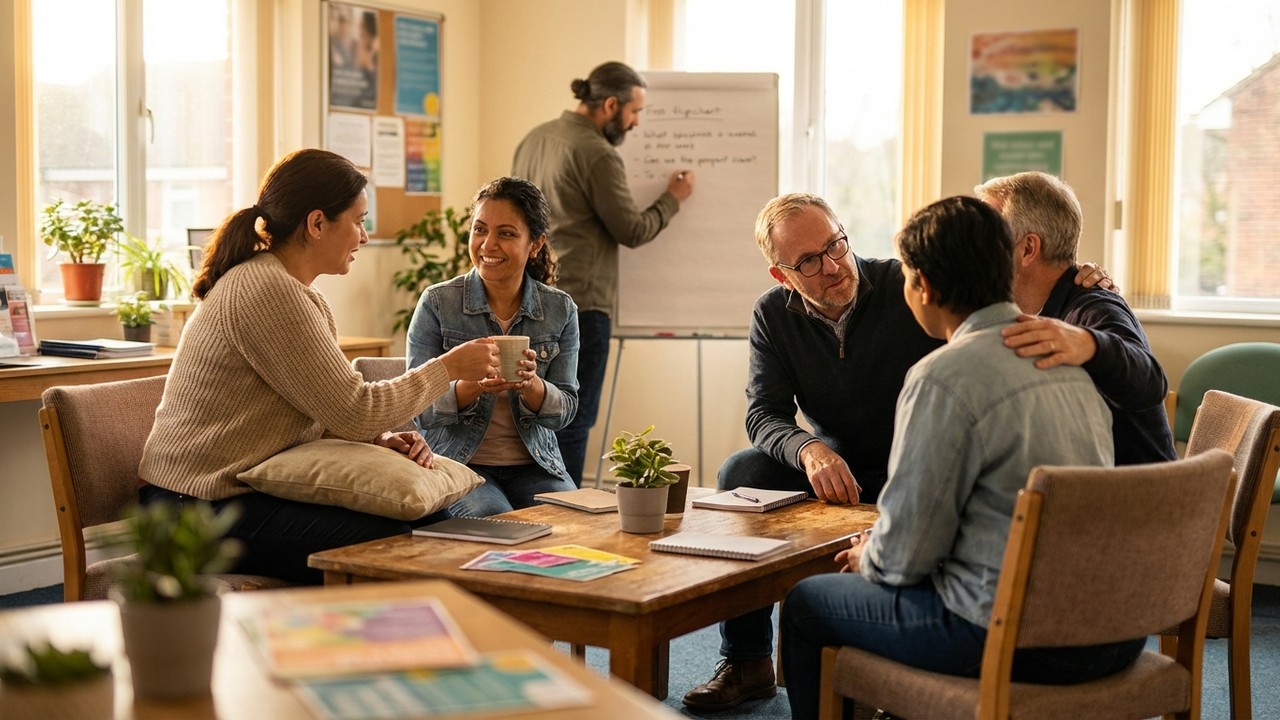
When 16-year-old Maya first walked into a small after-school center in her town, she carried two backpacks: schoolbooks and a silence so heavy she could not name it. A teacher handed her a warm drink and an invitation to a youth circle. Months later she led a workshop about coping with anxiety. This is the quiet beginning of change we can scale.
Why this matters now
Young people are at the center of a global mental health and development challenge. According to the World Health Organization, many mental health conditions begin in adolescence and often go undetected and untreated. See the WHO adolescent mental health facts here: WHO: Adolescent mental health. UNICEF data on children and mental health underscores urgent gaps in services and support: UNICEF: Mental health data.
Local programs making international impact
From community drop-in centers to school-based counselling, local programs convert empathy into measurable outcomes. Organizations such as Save the Children and the International Rescue Committee pair direct services with advocacy, linking neighborhood-level trust to broader systems change.
"When a community listens, a child learns they are not broken — they are supported," reflects a program coordinator in a rural pilot supported by local partners.
These programs do more than treat symptoms. They create safe spaces for peer connection, teach coping skills, and connect families to economic and educational supports — bridging Wellness Advocacy, Youth Development, Social Empowerment, Local Programs, and International Aid.
How you can act
Real change is practical. You can:
- Support a local youth program: volunteer, donate, or offer pro bono services to community centers and schools.
- Advocate for policy: contact local leaders to fund school-based mental health and youth employment initiatives.
- Learn and share trusted information: use evidence from WHO and UNICEF to reduce stigma and demand services.
This work is urgent but not hopeless. Small centers become lifelines, trained peers become first responders, and sustained funding turns pilots into public programs. If Maya's circle can grow into a network of community hubs, thousands more young people will find the support they need.
Take one step today: find a local organization to support or share the WHO and UNICEF resources with your network. Healing starts in neighborhoods — and together we turn that spark into lasting systems of care.