
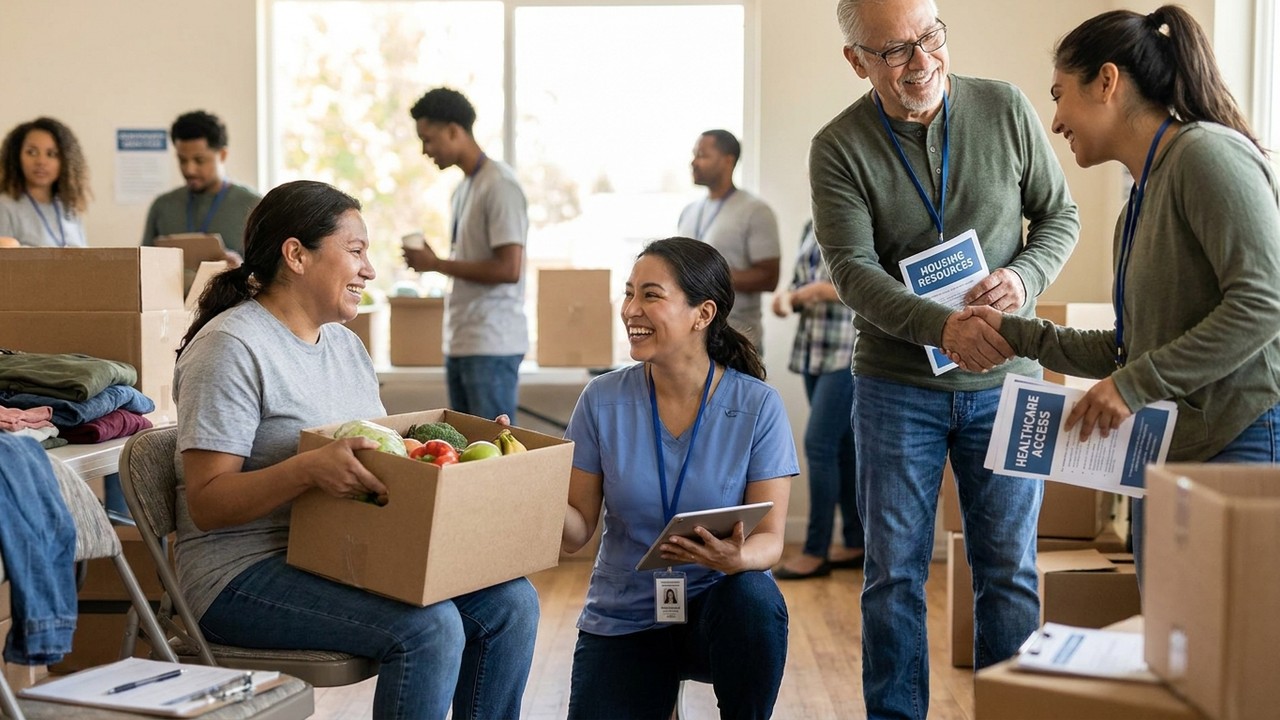
When Ana missed a single paycheck last winter, she stood in line for food, signed forms for emergency rent, and carried her coughing son to a neighborhood clinic that closed before he could be seen. Her story is not unique — it lives at the intersection of housing instability, hunger, and gaps in health access.
Why this moment matters
Recent reports show stress across the systems that keep people healthy. The United Nations' State of Food Security and Nutrition 2023 documents that global hunger trends reversed after years of progress and left millions more vulnerable; the report outlines the complex drivers of rising food insecurity (SOFI 2023). In the United States, Feeding America points to a nationwide network of roughly 200 food banks and 60,000 local pantries and meal programs that tens of millions rely on every year (Feeding America). Meanwhile, policy trackers from KFF report that millions remain uninsured or underinsured, creating real barriers to care and preventive services.
Nonprofits and solutions turning crisis into care
Organizations are bridging these gaps. Habitat for Humanity works on affordable, stable housing that prevents the cascade from eviction to health decline. Feeding America and local food banks keep emergency meals flowing. Global health NGO Partners In Health and programs like Project ECHO focus on training community health workers and clinicians so care reaches neighborhoods where it is needed most.
"When a neighbor brought our clinic's community health worker to our building, my son finally got the meds he needed and we found help to keep our lights on," Ana said.
What you can do today
Small, practical actions add up:
- Donate time or funds to local food banks or Feeding America.
- Support or volunteer with housing organizations like Habitat for Humanity to preserve affordable homes.
- Advocate for expanded health coverage and community health worker programs using resources from KFF and the CDC on social determinants of health.
- Help scale training models such as Project ECHO so clinicians in underserved areas get ongoing support.
These are not stopgaps; they are investments in stability, prevention, and equity. When housing is secure, when food is reliable, and when trained health workers are present, families like Ana's breathe easier, children miss fewer school days, and communities grow stronger.
Hope is practical. Join a local food drive, call your representative about affordable housing and health access, or support nonprofits scaling community care. Your action matters — it turns lines and clinics into lifelines.