
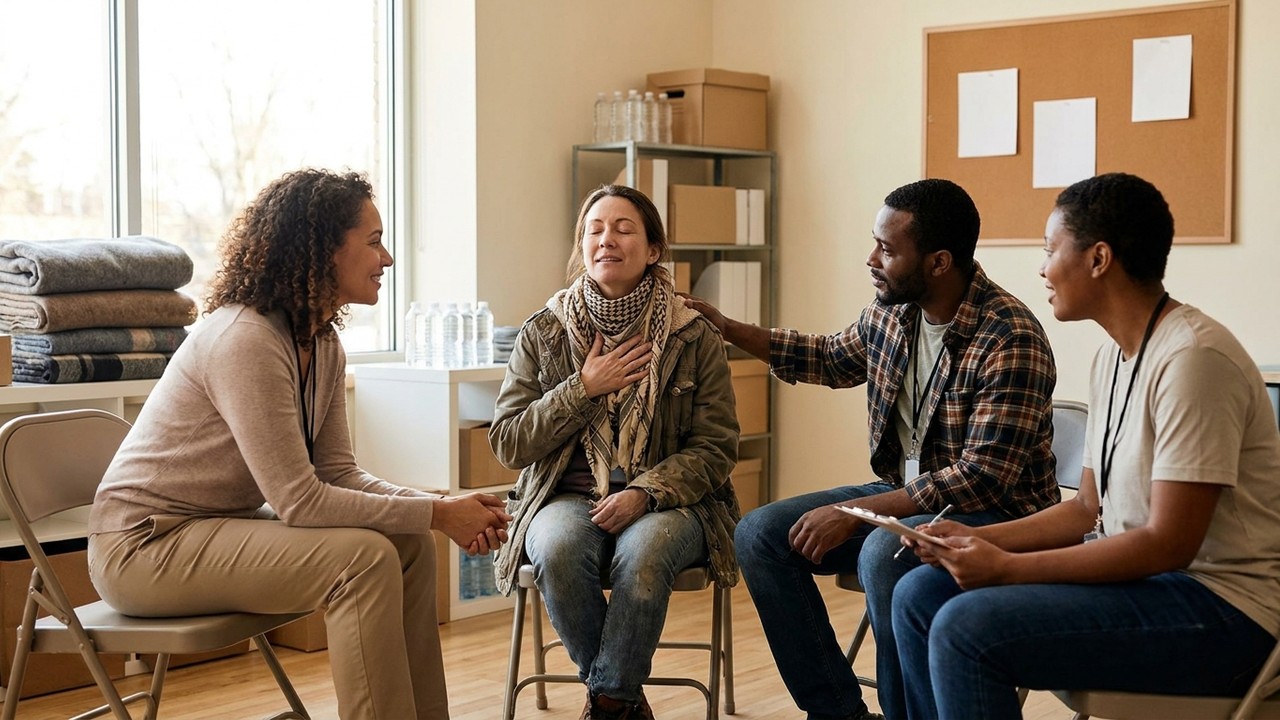
When Amina fled her village after floods swallowed the school where her children once learned, the wound she felt was not only from lost shelter but from a silence she could not name: the slow creep of anxiety that came with displacement. Her story is one of millions — and it helps explain why mental health must sit at the center of humanitarian and local response.
Mental health in numbers
Globally, mental disorders affect hundreds of millions. The World Health Organization estimates that nearly one in eight people worldwide were living with a mental disorder before the pandemic; gaps in care persist and financing remains low. Read the WHO report at World Mental Health Report and the WHO fact sheet at WHO Mental Health.
In the United States, roughly one in five adults experiences mental illness each year, according to NAMI. In humanitarian crises, the need multiplies: the UN estimated record humanitarian needs across 2024, driven by conflict, climate shocks, and displacement — all magnifying mental health and access-to-care gaps (Global Humanitarian Overview 2024).
What organizations are doing
Non-profits are bridging the gap. The International Rescue Committee provides mental health and psychosocial support to displaced communities; learn about their programs at IRC MHPSS. Partners In Health integrates mental health into primary care in low-resource settings to make care accessible where it is most needed: Partners In Health. These are models that combine international aid and local program design.
"Care that reaches people where they live — in shelters, community centers, and primary clinics — can change the life of a family and the resilience of a neighborhood."
Practical steps that make a difference
There is no single solution, but coordinated action works. Consider these ways to act:
- Support credible nonprofits providing mental health in crises and communities (donate, volunteer, amplify). See IRC and Partners In Health links above.
- Champion access to care locally: support school counselors, community clinics, and telehealth for rural patients.
- Push for funding — mental health often receives a fraction of health budgets; advocacy to increase this changes systems.
- Reduce stigma by starting conversations at work, school, and home.
Why hope is real
Small investments yield big returns. Evidence shows that community-based programs and integration of mental health into primary care improve outcomes and resilience. When donors, governments, local leaders, and nonprofits coordinate, people like Amina can find therapy, medication, and community support — and children can return to school with hope.
Take action today: visit the IRC or Partners In Health links above to learn how to help, contact your local clinic to ask about mental health services, or start a donation drive for community counseling. Even one conversation can break a silence and save a life.


