
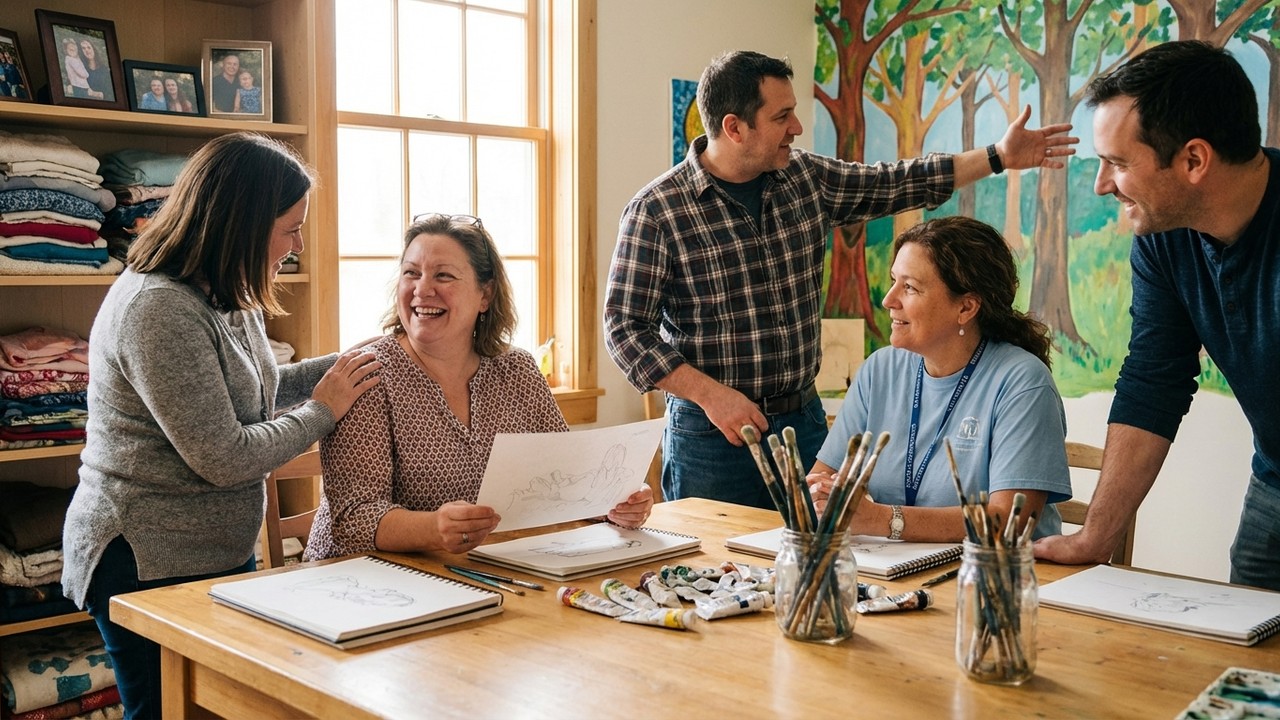
She arrived clutching a single sketchbook and a worry that felt larger than her neighborhood. Within months, her drawings became a bridge: to peers, to counseling, to a mentor who helped her mother find a part-time job. This is not a solo miracle — it is the unfolding story of how art, family support, health services, and cultural spaces together rebuild lives.
Why this matters now
Mental health among young people is a growing global concern: the World Health Organization estimates that 1 in 7 adolescents experience a mental disorder, underscoring the need for community-based supports that include creative and cultural engagement. WHO: Adolescent mental health
At the same time, cultural and creative participation is recognized by UNESCO as essential to resilient communities and cultural diversity. Local arts programs often act as low-barrier gateways to broader family and health services, especially for girls and women who face systemic barriers. UNESCO: Cultural diversity and creativity
Real organizations, real impact
Non-profits are bridging the gaps. Artists for Humanity uses paid arts apprenticeships to connect young people with mentors and careers, while Room to Read focuses on gender equality and literacy so girls can remain in school and access opportunities. Health partners like Partners In Health integrate medical and mental health services with community programs so creativity is paired with concrete care.
"When I painted my first mural, my daughter started singing again. It felt like our house could breathe."
What the research shows
Arts education and cultural participation have measurable benefits: research compiled by arts and education institutions shows participation improves emotional regulation, school engagement, and community cohesion. See resources from the National Endowment for the Arts on arts education and health links. NEA: Arts education
How you can help today
Small actions compound into community change. Consider these practical steps:
- Donate to or volunteer with local arts-apprenticeship programs like Artists for Humanity that pay young creators and connect families to services.
- Support girls' education and literacy efforts through organizations such as Room to Read, which helps girls stay in school and access life skills.
- Advocate for integrated services: ask your local school board or council to fund arts education tied to family support and mental health referrals.
- Share stories and cultural work from your community to amplify voices and preserve local heritage, following UNESCO principles for cultural diversity.
Hope is not passive. When art programs sit beside clinic doors and family-support services, they create a continuum: a child draws, a parent finds work, a family accesses care. These linked interventions are how communities recover and thrive.
If one story moved you, act on it: donate, volunteer, or simply attend a local youth arts event and ask how the program supports families and health services. Together, creative expression and compassionate systems turn fragile moments into lasting opportunity.


