
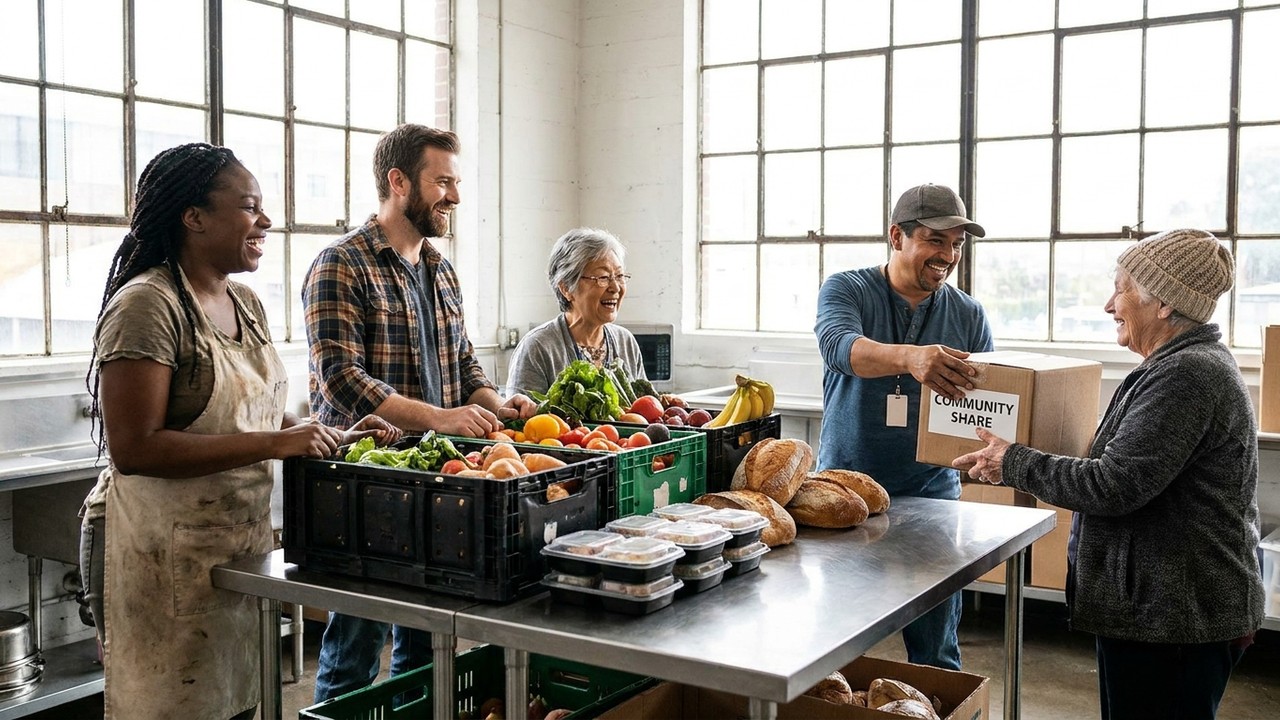
At the end of a busy day, perfectly edible food can be left behind while a neighbor wonders where the next meal will come from. That gap is more than a missed opportunity: it is a challenge we can tackle together.
The UN Environment Programme’s 2024 Food Waste Index estimates that the world wasted 1.05 billion tonnes of food in 2022. Households accounted for 60 percent of that waste, food service for 28 percent, and retail for 12 percent. The report makes clear that food waste is not only a problem for shops and restaurants; choices at home matter, too.
Rescue what can still nourish
Food waste and hunger are connected, but there is no single fix. Not every discarded item is safe or suitable to donate. Still, when good food can be redirected in time, food rescue can turn a surplus into a meal and keep usable food out of the waste stream.
Feeding America works with food businesses and its network of local food banks to help recover and distribute food. Community food banks, mutual-aid groups, and local rescue organizations also help connect donors with people who can use what would otherwise go unsold.
Small steps, real impact
We can all help make more food count:
- Plan meals and shop with a list, then freeze or use ingredients before they spoil.
- Ask a local food bank what foods, packaging, and delivery arrangements it can accept.
- Encourage nearby stores, restaurants, and event organizers to explore safe food donation or rescue options.
One rescued meal will not solve hunger, and one careful shopping trip will not end food waste. But repeated choices, supported by organizations that move food where it is needed, can build a more generous and less wasteful food system. Start by checking what your local food bank needs, and share that answer with someone who can help.