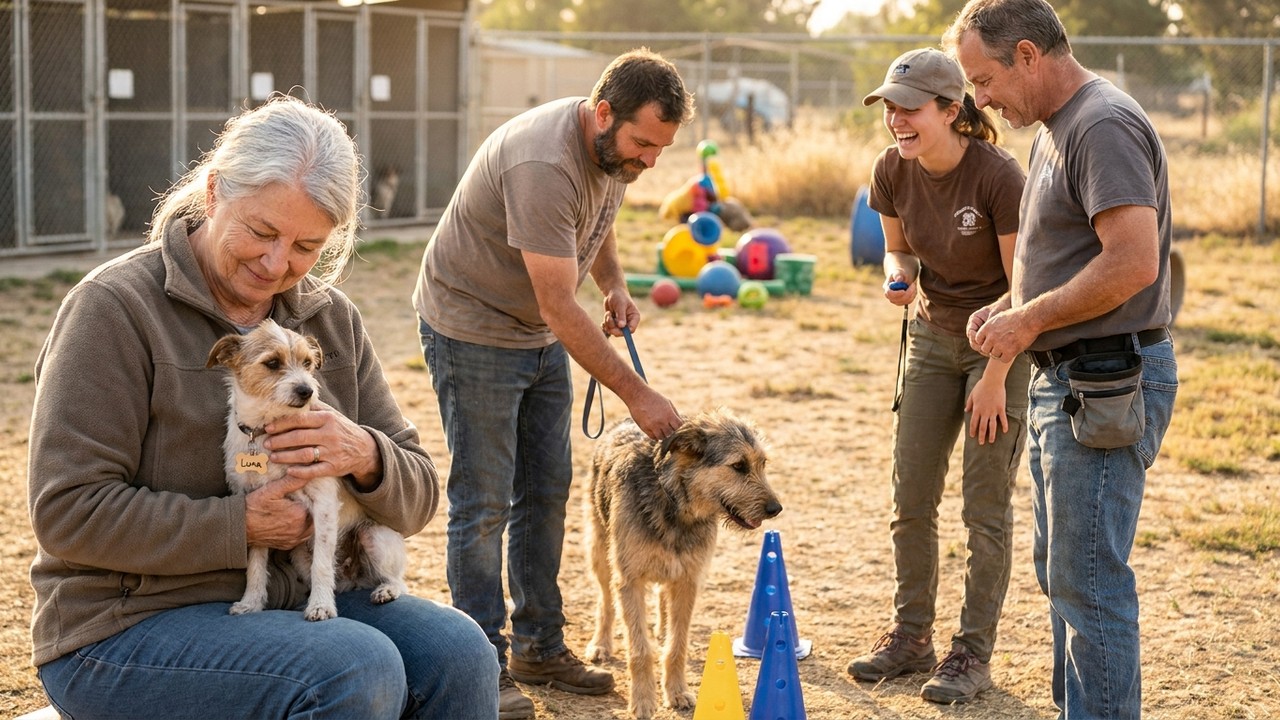
When a small, trembling dog named Luna was carried out of a cramped backyard by volunteers last spring, she was more than a rescue; she was a mirror of a national problem and a promise of what community action can change.
Each year an estimated 6.3 million companion animals enter U.S. animal shelters — roughly 3.1 million dogs and 3.2 million cats, according to the ASPCA. Many arrive scared, sick, or lost; others are surrendered when families can no longer care for them. (ASPCA)
Why training matters
Luna's recovery did not begin with adoption — it began with training. Shelter staff and volunteers trained her to trust humans, socialize with other dogs, and walk on a leash. Training reduces stress, increases adoptability, and lowers return rates. Organizations like the Association of Shelter Veterinarians and university shelter-medicine programs provide evidence-based care and training resources that improve outcomes for animals and shelters alike. For resources and best practices see the Humane Society's shelter guidance at Humane Society.
Rescue, adoption, and the numbers
Rescue groups and national nonprofits catalyze lifesaving. Best Friends Animal Society has been a leader on the national no-kill movement and partners with hundreds of shelters to raise lifesaving rates; you can learn about their programs at Best Friends. Real-time shelter data and trends are tracked by organizations like Shelter Animals Count, which helps communities target resources and measure progress: Shelter Animals Count.
During and after the pandemic many communities saw a surge in adoptions and foster care; as those patterns normalize, shelters again face capacity and behavioral challenges. Training, foster networks, and volunteer-run enrichment programs directly reduce returns and euthanasia, turning crisis into recovery.
"Small actions — a training session, a week-long foster, a donation — add up to lives saved."
How you can act today
Stories like Luna's become hopeful because people, nonprofits, and municipal shelters work together. Here are concrete ways to help:
- Adopt or foster from your local shelter or search nationwide at Petfinder.
- Volunteer for training and enrichment to reduce stress and teach life skills that make animals more adoptable.
- Support reputable nonprofits such as Best Friends and the ASPCA that fund rescue, training, and shelter improvements.
- Donate supplies or funds to local shelters; many maintain wish lists and emergency funds for medical care and transport.
- Advocate for municipal support of shelter staff training and no-kill policies by contacting local leaders.
When Luna learned to trust, a volunteer shared a simple line: "She's not lost — she was waiting for someone to believe she could be saved." That belief is the engine of rescue, training, and adoption work everywhere.
Hope starts with one person and one action. Visit a shelter, sign up for a training shift, foster for a week, or donate. Each step is a vote for compassionate, evidence-based animal welfare. Find local volunteer opportunities, training programs, and adoptable animals today and be part of the next rescue story.