
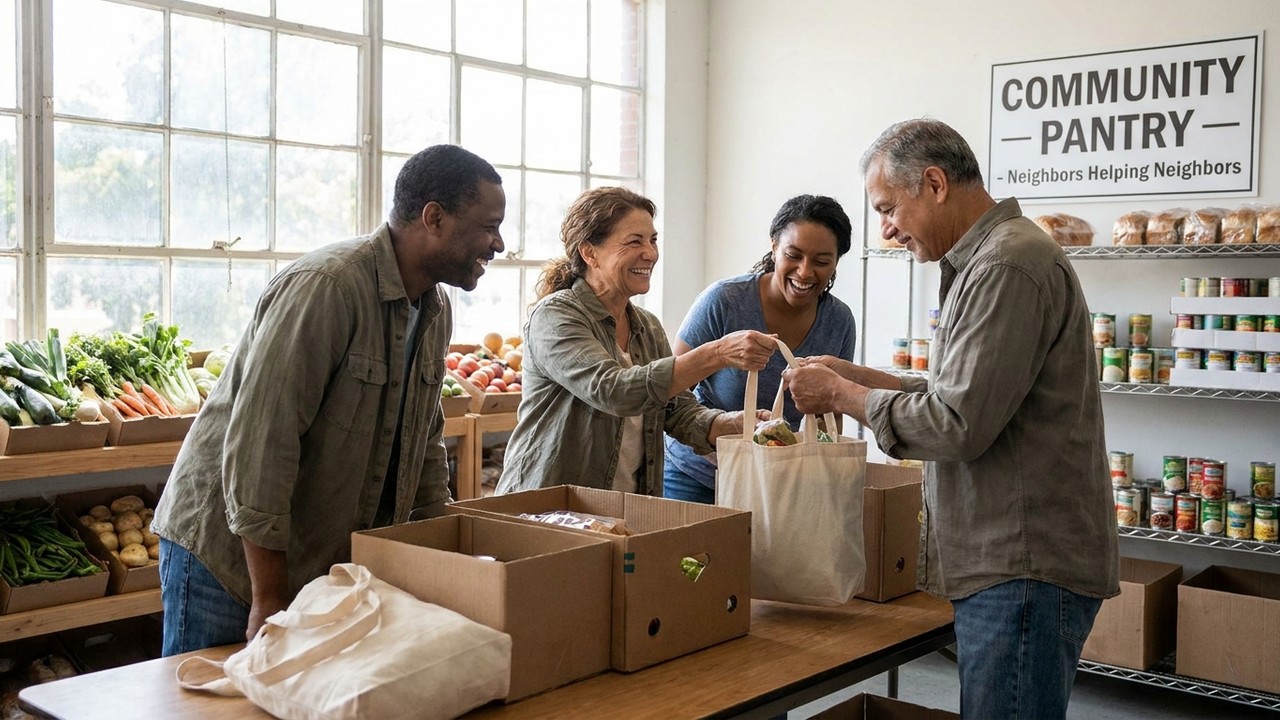
Imagine opening the refrigerator after a long day and finding almost nothing to make for dinner. For millions of families, that is not a passing worry. It is a recurring question: What can we eat tonight?
The U.S. Department of Agriculture reported that 47.4 million people in the United States experienced food insecurity in 2023, including 13.8 million children. Food insecurity means limited or uncertain access to enough food; it can touch households in every community. Read the USDA report.
Neighbors helping neighbors
Across the country, food banks and local pantries turn donations into groceries, meals, and a little breathing room. Feeding America, a nationwide network of food banks, helps connect people with food assistance and supports local organizations serving their communities.
A food drive may look like a collection box filling up one can at a time. But behind each donation is a practical act of care: a shelf restocked, a meal made possible, a parent able to focus on the next challenge instead of the next grocery bill. Food banks know their communities best, so checking what they need before donating can help make every contribution count.
Turn concern into action
You do not have to organize a large campaign to make a difference. You can:
- Find a nearby food bank through Feeding America's food bank locator.
- Ask a local pantry which foods or supplies it currently needs, then organize a small collection at work, school, or in your neighborhood.
- Volunteer, or make a donation to help a food bank respond to needs in its community.
Hunger can feel overwhelming when viewed as a national number. But help often begins close to home, with neighbors choosing to show up for one another. This week, take one small step: learn what your local food pantry needs, and invite someone else to join you.