
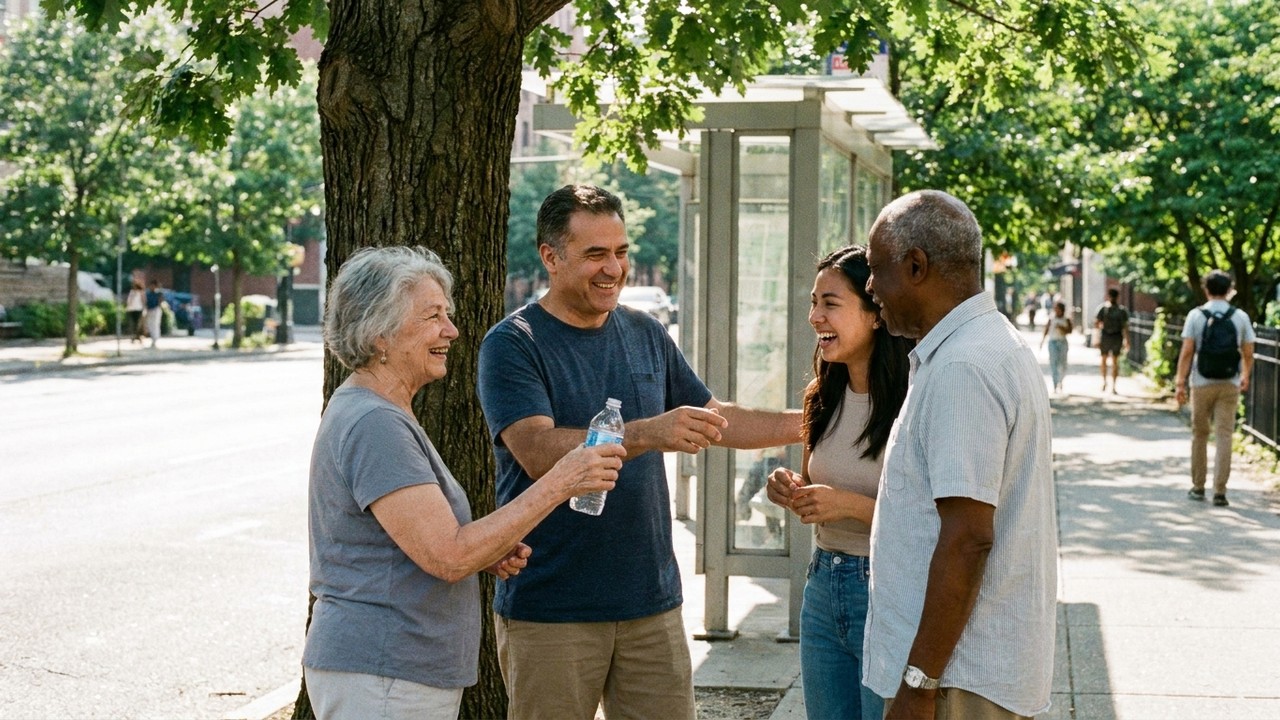
Imagine waiting for a bus on a baking afternoon with no tree, no shelter, and nowhere cool to pause. For many people, extreme heat is not an inconvenience; it is a health risk. And the places we share can either intensify that risk or help ease it.
In January 2025, the EU’s Copernicus Climate Change Service reported that 2024 was the warmest year in its records, with global temperatures around 1.6°C above the estimated preindustrial average. One unusually warm year does not, by itself, mean the Paris Agreement’s long-term 1.5°C limit has been passed. But it is a stark warning. Read Copernicus’s 2024 climate highlights.
The health stakes are already serious. The World Health Organization estimates that heat caused about 489,000 deaths a year worldwide between 2000 and 2019. Older adults, young children, outdoor workers, and people with existing health conditions can be especially vulnerable. See the WHO’s heat and health overview.
Why a tree can matter
Trees do more than soften a street. Their shade can cool surfaces and help reduce the urban heat island effect, when built-up areas become hotter than their surroundings. The U.S. Environmental Protection Agency explains how trees and other vegetation can help reduce heat islands. Learn how urban greenery helps.
And when neighbors plant and care for trees together, the benefits reach beyond the thermometer. A greener block can offer a place to rest, meet, and feel connected. That kind of shared space matters, especially for people who have few cool places to turn.
Trees for Cities works with communities to plant trees and create greener urban spaces. Its work is one example of how local action can make streets more welcoming while supporting healthier environments.
Start where you are
You do not need to wait for a major project to get involved. Ask your local council about tree planting and maintenance, support a neighborhood greening group, or check whether a nearby park or community space needs volunteers. If you are organizing an outdoor gathering, consider shade, water, and rest breaks for everyone attending.
A cooler, more connected neighborhood is something people can build together. Find a local group, bring a neighbor along, and help make the next hot day a little safer for everyone.