
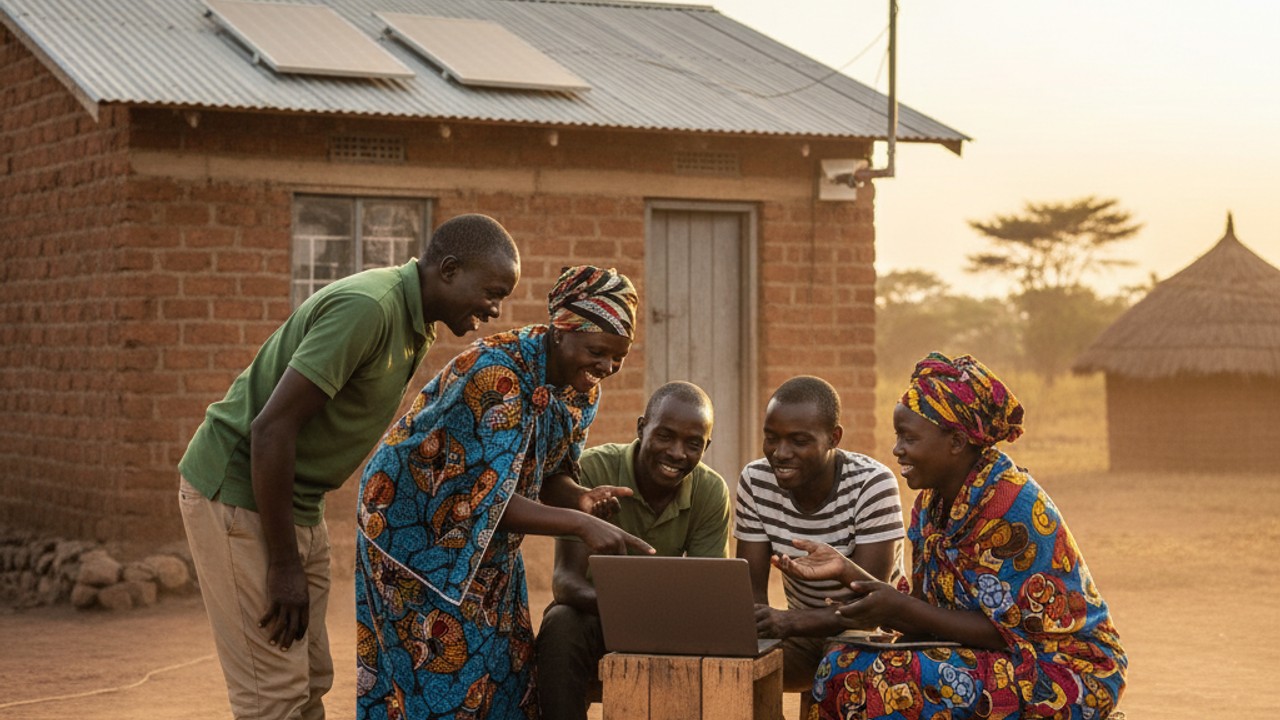
When Amina finished school in a Kenyan village last year she did not have a laptop at home. She walked two miles to the nearest cafe to use a single shared computer so she could finish an online coding course — a small act that highlights a global truth: access still decides who gets opportunity.
Why this matters right now: the GSMA estimates that roughly 2.7 billion people are not using mobile internet, a gap that keeps education, work, and civic life out of reach for many communities. See the GSMA Mobile Connectivity findings here.
The scale and the reality
International bodies have repeatedly documented the uneven path to digital inclusion. The International Telecommunication Union notes that billions remain offline and that connectivity is still far from universal (ITU background). At the same time, organizations focused on technology education show strong demand: millions of students want computing and digital skills but face obstacles of hardware, connectivity, or trained teachers — see Code.org's data on access and learning here.
People and organizations making change
Across the world nonprofits, NGOs, and community groups are turning connection into possibility. NetHope partners with internet service providers, humanitarian groups, and technology companies to bring connectivity to crisis-affected regions and underserved communities; learn about their work here. Organizations like Code.org and community-driven initiatives teach computing and mentor students so that access translates into skills and jobs.
Access is the first step to opportunity.
These efforts are not just technical fixes; they rebuild dignity and expand civic voice. When a community gets reliable connectivity and training, local businesses can sell online, students can study after dark, and civic groups can organize more effectively.
What you can do today
Action is collective and immediate. Here are clear, practical steps that individuals, companies, and platform teams can take:
- Support nonprofit partners: donate or volunteer with groups like NetHope or education nonprofits such as Code.org.
- Advocate to platforms: ask social and tech platforms to prioritize accessibility, affordable data plans, and local-language content.
- Mobilize resources locally: push for community Wi-Fi, school-device programs, and public-private partnerships that fund teacher training in digital skills.
- Share expertise: engineers, designers, and educators can mentor, open-source tools, or contribute time to local projects.
Hope is real: mobile connectivity and digital learning initiatives show steady progress year after year, and community-driven projects often scale faster because they reflect local needs. But progress depends on more hands joining the work.
If Amina's walk to a cafe taught us anything, it is that the solution is both technological and human. Platforms, nonprofits, and citizens together can turn one-mile walks into door-to-door access to education and opportunity.
Do one thing today: explore NetHope or Code.org, share their stories with your network, or ask your company to sponsor connectivity in a nearby community. Small choices compound into lasting change.
